
Every signature on a contract represents a critical business decision, one that can either accelerate growth or introduce unforeseen liabilities. Yet, many professionals enter these high-stakes discussions underprepared, often relying on intuition rather than a structured strategy. This approach frequently leaves significant value on the table and exposes organizations to unfavorable terms that can have long-lasting financial and operational consequences. In today's competitive environment, mastering the art and science of negotiation is no longer a soft skill; it is a core competency essential for sustainable success.
This guide moves beyond generic advice to provide a comprehensive toolkit of actionable contract negotiation tips. We will dissect the process into specific, data-driven tactics that you can implement immediately to gain a competitive edge. You will learn how to conduct meticulous pre-negotiation analysis, establish non-negotiable walk-away points, and deploy collaborative strategies that build stronger partnerships while securing your interests. We will also explore clause-specific tactics for high-risk areas like indemnification and liability caps, ensuring you can navigate complex legal language with precision.
Ultimately, the goal is to transform your approach to contracts, viewing them not as static documents but as dynamic tools for value creation. By mastering these techniques, you will be equipped to secure better outcomes, mitigate risks, and turn every agreement into a strategic asset that actively supports your organizational objectives. This listicle is your roadmap to achieving that proficiency, providing the practical insights needed to negotiate with confidence and authority.
1. Thorough Pre-Negotiation Contract Analysis
The most impactful contract negotiation tips are often deployed before you ever speak with the other party. A comprehensive pre-negotiation analysis is the foundation of a successful outcome, transforming your approach from reactive to strategic. This involves meticulously dissecting the proposed agreement to identify key terms, uncover hidden risks, and pinpoint potential deal-breakers before discussions begin. It’s about building a complete map of the contractual landscape so you can navigate it with confidence.
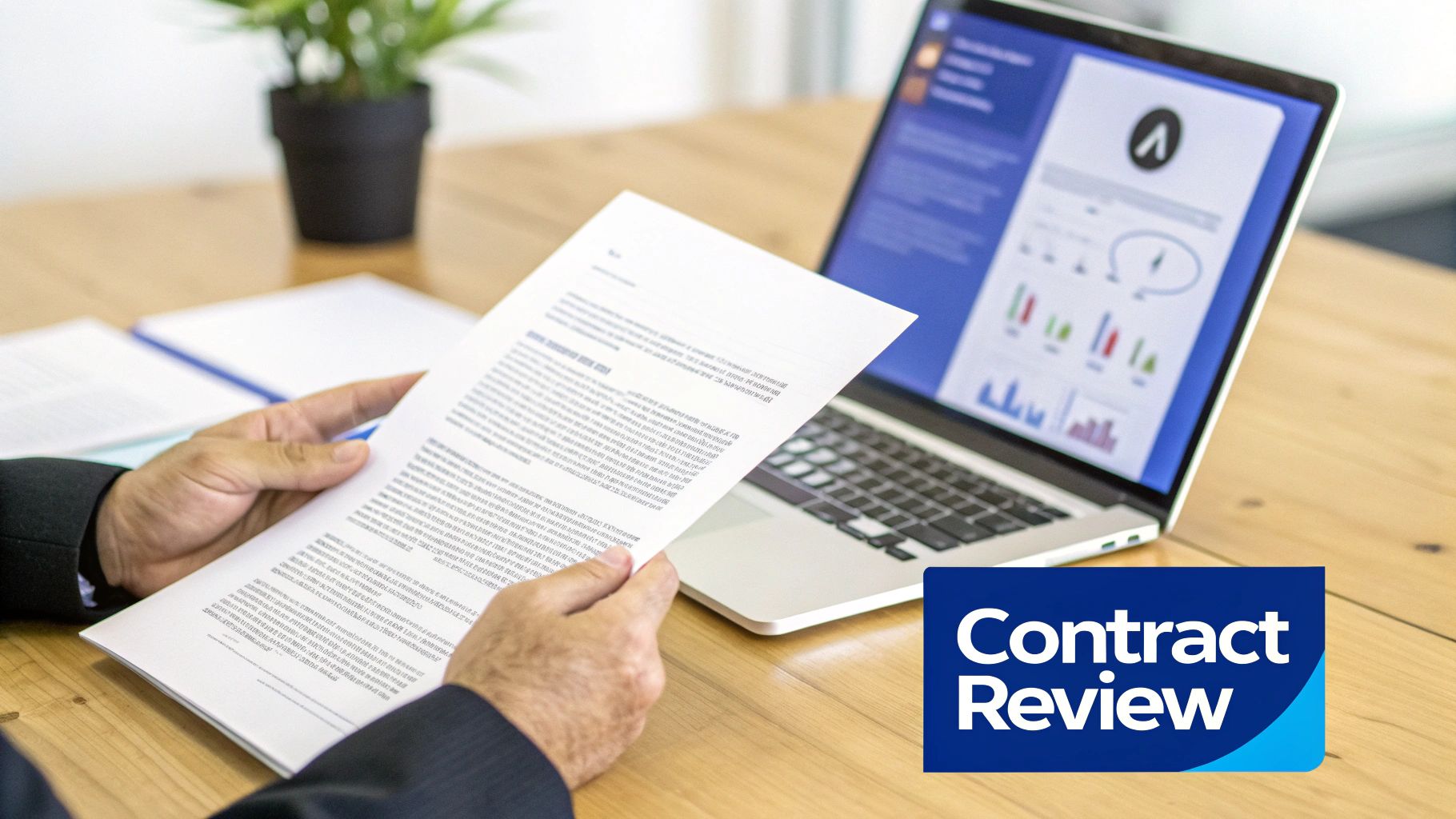
This foundational step goes beyond a simple read-through. Modern legal professionals leverage AI-powered tools like LegesGPT to accelerate this process. These platforms can instantly extract critical information, flag ambiguous or problematic language, and even cross-reference clauses against jurisdictional precedents. This allows your team to focus on high-level strategy instead of getting bogged down in manual review. For example, a tech startup can use an AI tool to quickly analyze a complex vendor SaaS agreement, identifying unfavorable auto-renewal clauses and excessive liability limitations that might have otherwise been missed.
How to Implement This Strategy
Effective analysis requires a structured approach. First, you must capture every detail from initial internal review meetings. Utilizing services for transcribing contract review meetings ensures that all stakeholder concerns, identified risks, and proposed amendments are accurately documented, forming an official record that guides your strategy.
Next, create a standardized workflow for every contract:
- Generate an AI Summary: Use a tool to create a high-level summary document highlighting key dates, obligations, and financial terms. Distribute this to all stakeholders to establish a baseline understanding.
- Create a Risk Matrix: Develop a standardized risk assessment report that scores clauses (e.g., indemnification, limitation of liability, IP ownership) based on their potential impact. This quantifies risk and helps prioritize negotiation points.
- Align on Priorities: Share the analysis and risk matrix with key decision-makers to align on non-negotiable terms versus "nice-to-have" concessions. This prevents internal conflict during active negotiations.
By front-loading your analytical work, you enter the negotiation not just prepared, but with a significant tactical advantage. This preparation is a key differentiator in achieving favorable terms. Learn more about how you can leverage AI for contract review to enhance your negotiation preparedness.
2. Establish Clear Goals and Walk-Away Points
Entering a negotiation without a defined destination is a recipe for failure. Establishing clear goals and non-negotiable walk-away points is a critical contract negotiation tip that provides a strategic framework for your discussions. This process involves identifying your ideal outcome (Best Alternative to a Negotiated Agreement, or BATNA), acceptable compromises, and the absolute minimum terms you will accept. This clarity prevents emotional decision-making and ensures your team remains aligned and focused on protecting core interests.
This preparatory work is foundational, allowing negotiators to make principled concessions without sacrificing essential protections. An investment firm, for example, will define its required management fee structure and key investor protection clauses as walk-away points before ever engaging with limited partners. Similarly, a software vendor must establish its maximum acceptable liability cap and minimum service level commitments to avoid agreeing to unsustainable obligations. Before engaging in any negotiation, it's vital to clearly define your objectives and understand your walk-away points. This strategic approach extends to formal procurement processes; for instance, understanding how to write a tender bid that actually wins requires a deep understanding of your own commercial limits and strategic goals from the outset.
How to Implement This Strategy
A disciplined approach to goal-setting transforms abstract objectives into a concrete negotiation plan. This process requires internal alignment and a data-driven understanding of what truly matters to the business.
Here's a workflow to establish your parameters:
- Create a Decision Matrix: Develop a document that ranks all key contract terms (e.g., payment terms, IP rights, termination clauses) by importance. Assign a score to each, creating a clear hierarchy of priorities.
- Define Fallback Positions: For each of your high-priority goals, establish two or three pre-approved alternative or fallback positions. This gives your negotiators flexibility without needing to pause discussions for internal approvals.
- Document Your Rationale: For every walk-away point, document the specific business or legal reason it is non-negotiable. This rationale is crucial for maintaining resolve and articulating your position effectively during negotiations.
- Align the Team: Circulate the finalized goal and walk-away point document to every stakeholder and member of the negotiation team. This ensures everyone is operating from the same playbook and understands the strategic boundaries.
3. Research the Other Party's Position and Constraints
One of the most powerful contract negotiation tips involves shifting your focus outward. Before entering discussions, it's crucial to gather intelligence on the other party’s typical contract preferences, the industry standards they adhere to, and any potential business or regulatory constraints they face. Understanding their perspective allows you to anticipate their moves, identify opportunities for creative, mutually beneficial solutions, and avoid making unrealistic demands that could stall progress. It’s about knowing their playbook as well as you know your own.

This strategic intelligence gathering is no longer a manual, time-consuming process. AI-powered legal research tools can instantly surface relevant market data, analyze competitor agreements, and identify regulatory frameworks that shape the other party’s position. For instance, a service provider preparing to negotiate with a large corporation can analyze that corporation's public contract filings to benchmark standard payment terms and liability caps, giving them a significant advantage. This data-driven approach frames your arguments in a context the other party understands and respects.
How to Implement This Strategy
A successful intelligence-gathering effort is systematic, not speculative. Start by leveraging modern tools to build a comprehensive profile of the other party's contractual landscape and business environment.
- Conduct AI-Powered Market Research: Utilize a platform's deep research capabilities to access current industry standards and precedents across relevant jurisdictions. This provides objective data to support your proposed terms and counter unreasonable requests.
- Analyze Public Filings and Agreements: Review the other party's recent SEC filings, publicly available contracts, or press releases. These documents often reveal their standard terms, negotiation priorities, and recent business challenges.
- Identify Regulatory Hurdles: Research any specific regulatory requirements (like GDPR for data privacy or industry-specific compliance) that constrain their flexibility. Knowing their mandatory obligations helps you understand which terms are truly non-negotiable for them.
- Document Your Findings: Compile your research into a concise brief. Share these findings with your negotiation team to build a credible, evidence-based strategy and foster empathy for the other party's position.
By understanding your counterparty's world, you transform the negotiation from a confrontation into a collaborative problem-solving exercise, significantly increasing the likelihood of a favorable and durable agreement.
4. Use Collaborative Problem-Solving Over Adversarial Tactics
Effective contract negotiation tips often challenge traditional thinking, shifting the dynamic from a win-lose battle to a joint problem-solving exercise. A collaborative approach focuses on uncovering and satisfying both parties' underlying interests, fostering a partnership rather than an adversarial confrontation. This method builds stronger relationships and produces more resilient, creative agreements that are less prone to future disputes. It's about engineering a mutual win, not just claiming a bigger piece of the pie.
This strategy reframes the negotiation as a quest for a shared solution. For instance, instead of battling over a rigid payment schedule, a manufacturer could work with a supplier to co-create payment terms that align with both companies' cash flow cycles. Similarly, a software vendor can move beyond a standard SLA and develop flexible provisions that truly accommodate a key customer's operational needs. This preserves goodwill and unlocks value that adversarial tactics would destroy, turning a simple transaction into a strategic partnership.
How to Implement This Strategy
Adopting a collaborative mindset requires a structured, transparent process. The goal is to understand the "why" behind each party's position and work together to find a solution that addresses those core needs.
- Identify Shared Goals: Begin discussions by outlining common objectives. Frame the negotiation with statements like, "We both want a stable, long-term supply chain" or "Our shared goal is a successful product launch." This establishes a cooperative tone from the start.
- Present Data-Backed Proposals: Use objective criteria and market data to support your positions. AI-powered legal research can provide jurisdictional precedents and industry benchmarks, transforming your requests from demands into well-reasoned proposals.
- Understand Underlying Interests: Ask open-ended questions to discover the other party’s constraints and priorities. Inquire about their operational challenges, financial pressures, or risk tolerance to understand what truly motivates their stance.
- Propose Creative Alternatives: When you reach an impasse, brainstorm multiple solutions that could address both parties' core concerns. This demonstrates flexibility and a genuine commitment to finding a mutually beneficial outcome.
5. Document All Agreements and Changes in Writing
Verbal agreements made during dynamic negotiations are notoriously unreliable and often lead to future disputes. One of the most critical contract negotiation tips is to meticulously document every agreed-upon point, proposed change, and concession in writing. This practice creates an unambiguous audit trail, preventing misunderstandings and providing a clear record of the negotiation's progression. It transforms abstract conversations into a concrete, shared reality that all parties can reference.
This disciplined approach ensures that nothing is lost in translation between a phone call and the final redlined document. For instance, a corporate legal team negotiating a multi-year service agreement should document every email exchange that confirms a change in service levels or pricing. This log becomes invaluable if a key negotiator leaves the company or if disputes arise months later about what was actually agreed upon. It’s about building a fortress of clarity around the evolving terms.
How to Implement This Strategy
A systematic documentation process is essential for maintaining accuracy and alignment. Immediately after each negotiation session, whether in-person or virtual, send a concise summary email to the other party. This email should clearly outline the points discussed, agreements reached, and any outstanding items, creating a contemporaneous written record.
Next, establish a centralized and structured system for managing these records:
- Create a Master Negotiation Log: Use a shared document or spreadsheet to track every proposed change, the rationale behind it, and its current status (e.g., agreed, rejected, pending). This provides a single source of truth.
- Implement Strict Version Control: Ensure every draft of the contract is clearly labeled with a version number (e.g., v1.1, v2.0) and includes a summary of changes from the previous version. This prevents confusion and accidental reversion to old terms.
- Archive All Communications: Maintain organized digital folders for all related emails, meeting notes, and call summaries. This creates a comprehensive archive that can be referenced to resolve any future ambiguities.
This disciplined record-keeping not only protects your interests but also signals professionalism and good faith. Using standardized formats can streamline this process; you can find helpful starting points by exploring free business agreement templates to see how clear documentation is structured.
6. Leverage Industry Standards and Precedents
Grounding your negotiation positions in objective, external data is one of the most powerful contract negotiation tips you can employ. An evidence-based approach that relies on well-established industry standards, market benchmarks, and relevant legal precedents shifts the conversation from a battle of wills to a collaborative effort to reach a fair, market-aligned agreement. This strategy enhances your credibility, neutralizes unrealistic demands, and provides a logical foundation for your proposals, making them harder to reject.
This method transforms your arguments from "what we want" to "what is standard and reasonable." Modern legal technology significantly streamlines this process. AI-powered platforms like LegesGPT can analyze vast repositories of agreements to rapidly identify comparable contracts and distill industry norms across various sectors and jurisdictions. For instance, a construction firm negotiating a new project can use AI to reference standard payment terms and retention percentages from dozens of similar, recent contracts, providing concrete data to support its position against a developer proposing unusual terms.
How to Implement This Strategy
To effectively leverage external data, you must integrate research into your preparation workflow. This ensures your positions are not just defensible but also persuasive.
- Conduct AI-Powered Market Research: Before drafting your redlines, use a tool like LegesGPT to research market standards for key clauses like limitation of liability, indemnification, and service level agreements (SLAs). Analyze 10-20 comparable, recent contracts in your specific industry to understand the common range of terms.
- Document and Cite Your Sources: Don’t just claim your proposal is "market standard." Document and be prepared to cite specific precedents, benchmark reports, or anonymized data that support your proposed language. Sharing this evidence with the other party can establish credibility and depersonalize the negotiation.
- Frame Proposals Around Benchmarks: Instead of simply demanding a certain liability cap, you can frame it by saying, "Our research on similar SaaS agreements in the fintech space shows that a 12-month fee-based liability cap is the prevailing industry standard. We've structured our proposal to align with this benchmark."
By anchoring your requests to objective criteria, you make it more difficult for the counterparty to argue against them without appearing unreasonable. This data-driven approach is a key differentiator in achieving favorable and defensible contract terms.
7. Identify and Protect Against High-Risk Clauses
A key component of effective contract negotiation tips involves moving from defense to offense by proactively hunting down and neutralizing high-risk clauses. These are the contractual landmines, like unlimited liability, overly broad indemnification, vague termination rights, or unfavorable dispute resolution clauses, that can create catastrophic business consequences. Successfully identifying and mitigating these provisions is not just about getting a good deal; it’s about protecting your organization from unacceptable exposure.
This proactive risk management is where modern legal technology provides a decisive edge. AI-powered platforms like LegesGPT are trained to systematically scan agreements and flag high-risk language patterns that a manual review might miss, especially under tight deadlines. These tools can compare problematic clauses against a vast database of market standards and suggest safer, more balanced alternatives. For instance, a service provider can use AI to instantly catch a one-sided indemnification clause that holds them responsible for the client's actions, allowing them to renegotiate it before signing.
How to Implement This Strategy
A systematic approach is crucial for consistently de-risking contracts. First, define what constitutes "high-risk" for your organization and create a playbook that outlines your position on each. This ensures every team member negotiates from a unified, risk-aware standpoint.
Next, integrate this risk-first methodology into your review workflow:
- Create a High-Risk Clause Library: Develop a standardized list of unacceptable or "red flag" provisions (e.g., auto-renewal without notice, unilateral modification rights). Use LegesGPT to automatically scan incoming contracts against this library for instant alerts.
- Develop Safer Alternative Language: For each high-risk clause, prepare pre-approved, template language for safer alternatives. This equips your negotiators with ready-to-deploy solutions, speeding up the redlining process.
- Prepare Business Impact Justifications: For each clause you aim to modify, document the potential business impact if it remains unchanged. This arms your team with compelling arguments that frame your requests as reasonable and commercially necessary.
By making high-risk clause identification a non-negotiable step, you transform your contract management process into a powerful shield against future liabilities. This strategic focus is essential, particularly when evaluating a new partnership and drafting a comprehensive contract for a supplier.
8. Build Flexibility into Long-Term Contracts
In today's dynamic business environment, a static long-term contract can quickly become a liability. One of the most forward-thinking contract negotiation tips is to embed flexibility directly into agreements that span multiple years. This strategy acknowledges that market conditions, technology, and business needs will inevitably change, ensuring the contract remains viable and fair for both parties over its entire lifecycle. Instead of locking in rigid terms that may become disadvantageous, you build mechanisms for adaptation.
This proactive approach prevents contracts from becoming stale, burdensome, or a source of future disputes. For instance, a multi-year Software-as-a-Service (SaaS) agreement can include technology upgrade triggers that allow for contract modification when significant new features are released. Similarly, a long-term supply agreement can incorporate periodic market rate reviews, ensuring pricing remains competitive and realistic. This foresight transforms the contract from a rigid constraint into a resilient framework for a sustainable partnership.
How to Implement This Strategy
Building an adaptable contract requires defining clear triggers and processes for change. The goal is to create predictable pathways for adjustment, reducing the need for contentious, ad-hoc renegotiations down the line.
- Define Clear Triggers: Specify objective events that will initiate a contract review. These could be time-based (e.g., annual reviews), event-based (e.g., a change in regulatory law, a major technology shift), or performance-based (e.g., consistently missing service level agreements).
- Use Objective Indices for Adjustments: Tie escalation clauses for pricing or other terms to external, objective metrics. Common examples include the Consumer Price Index (CPI) for inflation adjustments or established industry benchmarks for material costs. This removes subjectivity and potential for conflict.
- Establish Review Procedures: Clearly outline the process for periodic reviews. Specify the timeline for the review, who needs to be involved, what information must be shared, and the procedure for formalizing any agreed-upon amendments.
- Incorporate Exit Ramps: For very long-term agreements, consider including sunset clauses or review-based termination rights. This allows a party to exit gracefully if, after a scheduled review, the terms are no longer commercially viable and a mutually agreeable adjustment cannot be reached.
9. Know When to Walk Away and Document Your Rationale
One of the most powerful contract negotiation tips involves knowing when a deal is no longer viable. The discipline to walk away from unfavorable terms is a critical tool that protects your long-term business interests and prevents "deal fever," the tendency to accept a bad agreement simply to close it. This strategy is not about failure; it's about strategic reallocation of resources, preserving leverage, and upholding your organization's core standards.
Walking away becomes a calculated business decision rather than an emotional reaction when it's backed by data. Modern legal professionals use tools like LegesGPT to quantify the potential negative impact of unacceptable clauses, such as unlimited liability or unfavorable IP ownership terms. This data-driven approach provides objective justification for walking away. For instance, a service provider can model the financial exposure of an unlimited indemnity clause, demonstrating to stakeholders that the potential risk far outweighs the contract's revenue, making the decision to decline the deal logical and defensible.
How to Implement This Strategy
A successful walk-away strategy is proactive, not reactive. It begins by defining your non-negotiables before talks even commence, ensuring your team is aligned on the absolute limits of acceptable risk.
Next, formalize your decision-making process:
- Establish Pre-Negotiation Criteria: Before the first meeting, document your specific walk-away triggers. These could be deal-breakers like a refusal to cap liability, unworkable payment terms, or unacceptable termination rights.
- Quantify the Risk: Use AI analysis from a platform like LegesGPT to generate a risk report on the problematic clauses. This report provides the objective data needed to justify your position to both internal stakeholders and the counterparty.
- Document the Rationale: If you decide to walk away, create a formal record detailing the specific clauses that were unacceptable and why. This document serves as an internal learning tool for future negotiations and protects the organization from future scrutiny.
- Communicate Professionally: Clearly and respectfully inform the other party of your decision, explaining which specific terms were insurmountable. This maintains a positive relationship and can leave the door open for future opportunities should their position change.
Comparison of 9 Contract Negotiation Tips
| Strategy | 🔄 Implementation complexity | ⚡ Resource requirements | 📊 Expected outcomes | ⭐ Ideal use cases | 💡 Key advantages / Tips |
|---|---|---|---|---|---|
| Thorough Pre-Negotiation Contract Analysis | Medium–High — requires tooling + legal review | Moderate — AI platform subscription + reviewer time | High risk reduction; stronger negotiation positions | Complex contracts (M&A, licensing, vendor agreements) | Use AI to extract key terms and generate standardized risk summaries |
| Establish Clear Goals and Walk-Away Points | Low–Medium — planning and alignment | Low — stakeholder time and simple templates | Faster decisions; fewer impulsive concessions | Any negotiation where priorities are clear (funds, procurement) | Create a decision matrix and document fallback positions before talks |
| Research the Other Party's Position and Constraints | Medium–High — deep research effort | High — data sources, legal research tools, analyst time | More realistic offers; creative, win‑win solutions | VC term sheets, supplier benchmarking, regulated industries | Leverage AI research to benchmark industry norms and identify constraints |
| Use Collaborative Problem‑Solving Over Adversarial Tactics | Medium — cultural and process shift | Moderate — facilitation time, relationship investment | Sustainable agreements; stronger relationships; fewer disputes | Long‑term partnerships, joint ventures, complex SLAs | Start by identifying shared interests and present data‑backed alternatives |
| Document All Agreements and Changes in Writing | Low — process discipline and templates | Low–Moderate — version control and admin time | Clear audit trail; fewer misunderstandings; easier finalization | Complex deals, multistakeholder negotiations, M&A | Send post‑session summaries; maintain a master negotiation log with versions |
| Leverage Industry Standards and Precedents | Medium — targeted research & citation | Moderate–High — AI research + comparable contracts | Defensible positions; faster consensus | SaaS SLAs, construction contracts, IP arrangements | Cite benchmarks from 10–20 comparables; present ranges, not outliers |
| Identify and Protect Against High‑Risk Clauses | Medium — legal expertise + tooling | Moderate — clause‑flagging tools and counsel review | Prevents major exposure; accelerates negotiation on key risks | Tech vendors, international agreements, indemnity‑heavy deals | Auto‑flag high‑risk language and prepare safe alternative clauses |
| Build Flexibility into Long‑Term Contracts | Medium — drafting adjustment mechanisms | Low–Moderate — legal drafting and index selection | Agreements remain relevant; lower breach risk over time | Multi‑year service/supply contracts, licensing | Define clear review triggers and tie adjustments to objective indices |
| Know When to Walk Away and Document Your Rationale | Low–Medium — decision framework + discipline | Low — analysis tools and stakeholder alignment | Avoids accepting poor deals; preserves negotiating credibility | High‑risk or unfavorable commercial terms, investment decisions | Set walk‑away criteria in advance and document the decision rationale |
From Theory to Practice: Elevate Your Next Negotiation
Navigating the complex landscape of contract negotiation is far more than a simple back-and-forth exchange. It is a sophisticated discipline that blends meticulous preparation, strategic communication, and unwavering commercial awareness. The journey from novice to expert negotiator is built upon transforming theoretical knowledge into a practical, repeatable process. The comprehensive list of contract negotiation tips we've explored provides the blueprint for that transformation.
Moving beyond reactive, line-by-line redlining to proactive deal-shaping requires a fundamental shift in mindset. It starts with an almost forensic level of pre-negotiation analysis and a crystal-clear definition of your goals, priorities, and non-negotiable walk-away points. This foundational work ensures you enter every discussion from a position of strength and clarity, immune to the pressure of making concessions on your core interests.
The Synthesis of Strategy and Execution
The most effective negotiators are not necessarily the most aggressive; they are the most prepared and strategically agile. They understand that a contract is not a battlefield but a framework for a successful relationship.
Here are the pivotal takeaways to integrate into your negotiation workflow:
- Preparation is Paramount: Your leverage is directly proportional to your level of preparation. Thoroughly analyzing the contract, researching your counterparty, and understanding industry benchmarks are not optional steps; they are the price of entry for a successful outcome.
- Embrace Collaborative Framing: Shifting from an adversarial ("me vs. you") to a collaborative ("us vs. the problem") mindset can unlock creative solutions. This approach builds trust and often leads to more durable, mutually beneficial agreements that are less likely to end in dispute.
- Risk Mitigation is a Science: The devil is truly in the details. Identifying and neutralizing high-risk clauses related to indemnification, liability caps, and termination rights is a critical defensive maneuver. Protect your downside with the same vigor you use to pursue the upside.
- Documentation is Your Shield: An unwritten agreement is a future argument waiting to happen. Maintaining a rigorous practice of documenting every agreed-upon point, change, and clarification in writing creates an unambiguous record that protects all parties and ensures alignment.
Turning Insights into Actionable Habits
Mastering these contract negotiation tips is an ongoing process of refinement. The key is to build a consistent methodology. Before your next negotiation, create a simple checklist based on the principles discussed. Did you define your BATNA (Best Alternative to a Negotiated Agreement)? Have you researched recent deals in the same sector? Have you identified the top three clauses that represent the most significant risk?
Key Insight: Successful negotiation isn't about winning every point. It's about achieving your primary objectives while building a sustainable commercial relationship that can withstand future challenges. The final agreement should be a tool for success, not a source of future conflict.
Ultimately, the goal is to create contracts that are not just legally sound but also commercially practical and strategically advantageous. By applying these techniques, you move beyond simply accepting terms and begin to actively shape them. Each negotiation becomes an opportunity to refine your skills, protect your organization's interests, and forge stronger, more transparent business partnerships. This disciplined approach transforms a daunting task into a manageable and highly valuable strategic function.
Ready to supercharge your preparation and analysis? Stop manually sifting through dense legal text and let LegesGPT do the heavy lifting. Our AI-powered platform helps you instantly analyze contracts, identify high-risk clauses, and benchmark terms against industry standards, giving you the critical data you need to negotiate with confidence. Explore how LegesGPT can become your indispensable negotiation partner today.