
If you're like most small business owners, your "contract management system" probably involves a mix of spreadsheets, email folders, and a calendar full of reminders. You're not alone. But let's be honest—this patchwork approach is costing you time and money, turning what should be a strategic asset into a major administrative headache.
Good contract management software for small business fixes this. It brings all those critical documents into one place, automates the tedious stuff, and gives you a single source of truth for every agreement.
Why Spreadsheets Are Holding Your Small Business Back
For a while, spreadsheets seem to get the job done. You might have one for supplier agreements, another for client NDAs, and maybe you've even color-coded your calendar for renewal dates. It feels organized, right up until it isn't.
That moment usually comes when an auto-renewal for a service you don't even use anymore hits your bank account. Or when you waste an afternoon frantically searching for the final version of a client agreement. These little fires aren't just annoying; they're expensive.

This constant firefighting isn't just inefficient; it’s a silent growth killer. Every hour spent hunting down a document or double-checking a renewal date is an hour you could have spent talking to customers or developing a new product. The real cost of using spreadsheets isn't the software—it's the lost opportunities and the unnecessary risks you're taking.
The Hidden Costs of Manual Contract Tracking
The problem with a makeshift system goes way beyond just being messy. It creates friction that slows down your entire operation.
- Financial Leaks: Unwanted auto-renewals are a classic example. But what about missed deadlines for early payment discounts or price increase notices you never saw? A single forgotten cancellation can easily drain hundreds, if not thousands, from your budget.
- Compliance Risks: Where are your signed NDAs stored? If they’re sitting in an unsecured email chain, you could be opening yourself up to serious security vulnerabilities and data privacy violations.
- Operational Bottlenecks: What happens when the one person who knows where a key supplier contract is located goes on vacation? Everything grinds to a halt. A central, accessible system keeps things moving.
- Wasted Time: Think about it: If an employee making $50/hour spends just two hours a week searching for contracts, that's over $5,200 a year in lost productivity. For just one person.
Contract management software isn’t an expense; it’s an investment in operational sanity. It turns contract admin from a reactive, time-sucking chore into a proactive, value-driving part of your business.
A Smarter Way Forward
This need for a better way is exactly why the global contract management software market is expected to hit USD 5.65 billion by 2030. Small businesses are a huge part of this shift, especially since cloud-based tools have become so affordable. You can see more details on this growth at Grand View Research.
Modern software doesn't just store your documents; it actively manages them. You get automated alerts for key dates, crystal-clear version control so everyone's on the same page, and simple approval workflows. This is also where AI assistants like LegesGPT can make a huge difference, helping you quickly understand complex legal language before you sign anything.
Of course, a great system starts with a great contract. You can learn how to build a solid foundation with a quality business contract template in our detailed guide.
Decoding Features That Actually Matter for Your Business
When you start shopping for contract management software, the feature lists can feel endless. It's easy to get sidetracked by enterprise-level tools that sound impressive but don’t solve the real problems a small business faces every day. The trick is to tune out the marketing hype and zero in on the core functions that will make a genuine difference.
For a growing marketing agency, the daily battle isn't about complex regulatory reporting; it's about tracking client sign-offs, managing project scope creep, and making sure freelancer agreements are actually signed and filed away properly. The right software is the one that solves those headaches.
Think of it this way: you wouldn't buy a massive commercial truck for a quick trip to the grocery store. In the same vein, you don't need a system built for a Fortune 500 legal department. Your focus should be on features that deliver immediate, practical value.
The Non-Negotiable Core Features
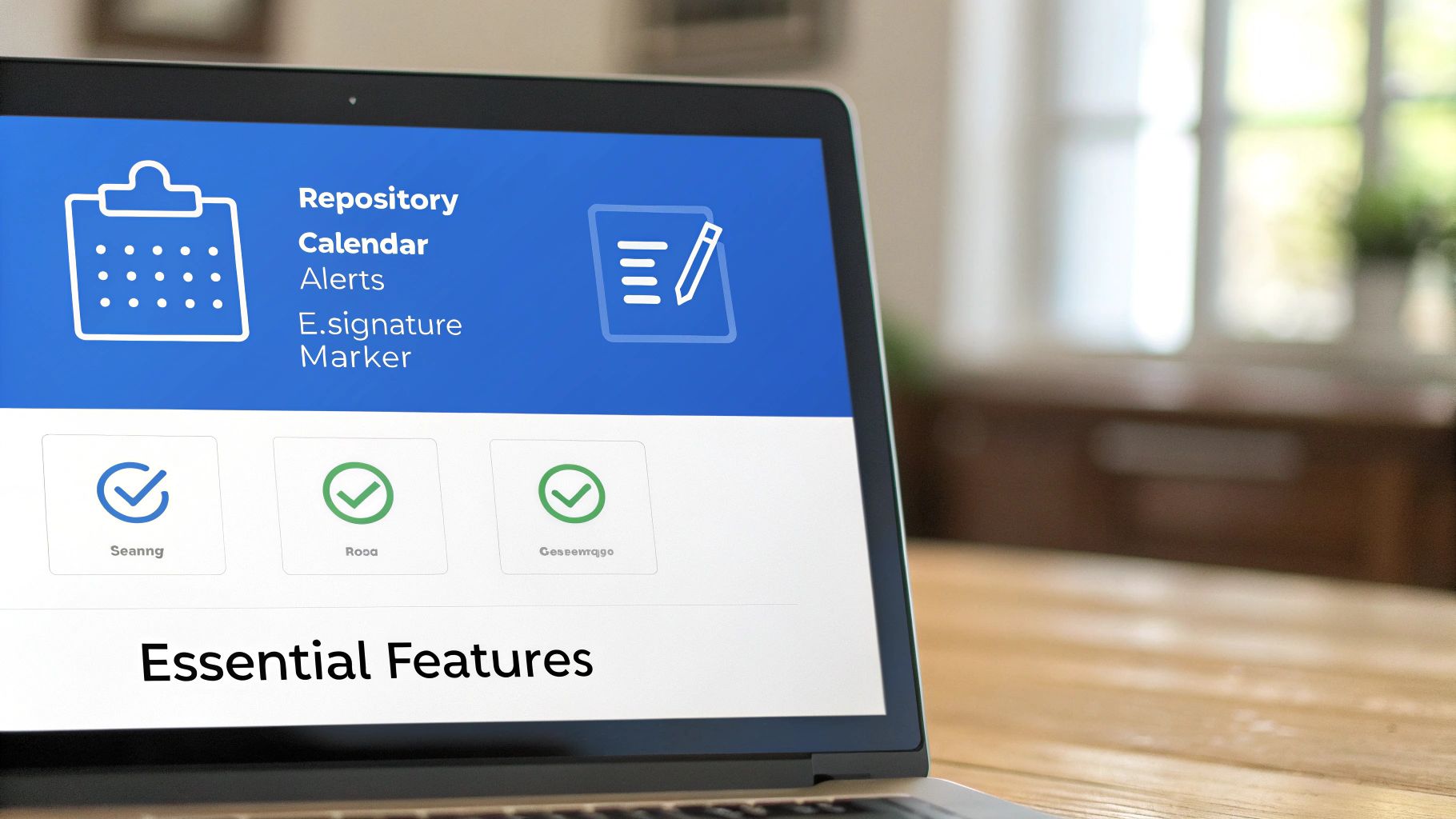
For most small businesses, the "must-have" list is surprisingly short. These are the workhorse features that save you the most time and prevent the most common—and often costly—mistakes.
- A Centralized Repository: This is your foundation. It’s a single, secure, and searchable home for all your contracts. No more panicked searches through old emails or disorganized shared drives. When you need to find the warranty details on that new printer, it should take you 30 seconds, not half an hour.
- Automated Alerts and Reminders: Missing a renewal deadline or an auto-renewal opt-out window is one of the easiest ways to bleed cash. A solid system automatically tracks these critical dates and pings you well in advance, giving you plenty of time to make a smart decision.
- Simple Approval Workflows: When a new client contract needs your final sign-off before it goes out the door, a basic workflow is your best friend. It ensures nothing gets sent prematurely and leaves a clear, documented paper trail of who approved what.
- E-Signature Integration: The ability to send, sign, and store documents entirely online is a game-changer. It gets rid of the print-scan-mail cycle, dramatically speeding up your sales and onboarding processes.
The goal isn’t to find software with the most features; it’s to find the one with the right features. Overly complex tools often lead to poor team adoption and wasted subscription fees.
Distinguishing Needs From Wants
Knowing where to draw the line is critical. A global corporation might need intricate compliance modules for GDPR or SOC 2 reporting, but for most small businesses, these are overkill. Paying for them before you need them is just a poor use of your budget.
Here's a quick way to think about what you really need versus what the big players use. This table breaks down the essentials from the enterprise-level "nice-to-haves."
Essential vs Enterprise Features in Contract Management Tools
| Feature Category | Essential for Small Business | Nice-to-Have (Enterprise Focus) |
|---|---|---|
| Document Storage | Centralized, searchable repository with version control. | Advanced document retention policies and litigation holds. |
| Workflow & Approvals | Simple, linear approval chains (e.g., Sales to Manager). | Complex, multi-stage conditional workflows with parallel approvals. |
| Reporting | Basic reports on upcoming renewals and contract statuses. | In-depth compliance dashboards and spend analysis across departments. |
| Security | Role-based user permissions and secure cloud hosting. | Granular, field-level security permissions and SOC 2/ISO 27001 certification. |
| Integrations | E-signature, and maybe with your CRM or accounting software. | Full API access and integrations with ERP and procurement systems. |
Ultimately, it comes down to solving your specific problems. For instance, a marketing agency’s biggest risk might be scope creep. They don't need a compliance dashboard; they need rock-solid version control and a clear audit trail to see who approved what and when. This allows them to confidently point back to the signed scope of work when a client asks for "just one more thing."
Before a contract even gets into your system, you have to know what you’re signing. This is where modern tools can give you a serious edge. You can improve your document review process with AI-powered analysis to catch risky clauses right from the start. That proactive step can save you a world of headaches later on.
Getting the Price Right: How to Find the Best Plan
For any small business, the conversation around new software almost always lands on one thing: the price. It’s no different with contract management software. The world of SaaS pricing can feel like a maze, but figuring it out is the key to finding a solution that helps your business grow without breaking the bank.
Before you even look at features, you need to understand how these companies charge. The goal isn't just to find the cheapest option on the menu today, but to pick a pricing structure that makes sense for how you actually operate. A good starting point is comparing different software pricing models to see what's out there.
Common Pricing Models Explained
As you start your search, you'll run into a few common ways these platforms bill their customers. Let’s break them down.
- Per-User Pricing: This is exactly what it sounds like. You pay a set fee for every single person on your team who needs access. It's simple and predictable, but watch out—the costs can balloon quickly as you hire more people.
- Per-Contract Pricing: Here, your bill is tied to the number of contracts you’re actively managing in the system. If you're a business that handles a smaller number of high-stakes agreements, like a specialized consulting agency, this model can be a perfect fit.
- Tiered Subscriptions: This is probably the most common model you'll see. Companies bundle features and limits (like the number of users or contracts) into different packages—think Basic, Pro, and Enterprise. This approach lets you start small and scale up as your needs get more sophisticated.
For most small teams, a tiered plan strikes the best balance. You can get started with an affordable plan that covers all the necessities and only move up when you truly need those premium features. It’s a smart way to avoid paying for powerful tools you won’t even touch.
A Real-World Example: A Small Consulting Firm
Let's make this practical. Picture a small consulting firm with three partners. They manage around 15 key client contracts each year, plus a few agreements with their own vendors.
A per-user plan would be overkill and expensive; they just don't need that many seats. A per-contract plan, on the other hand, aligns their costs directly with their revenue-generating work. A basic tiered plan that includes up to 5 users and 50 contracts would also be a fantastic, cost-effective option, giving them plenty of runway for growth.
Don’t get tunnel vision on the monthly subscription fee. Always ask about one-time setup costs, data migration fees, or extra charges for training sessions. These hidden costs can really change the total picture.
Why Powerful Tools Are No Longer Just for Big Companies
The best part for small businesses? You don't need a huge IT budget to get in the game anymore. The market for small and medium-sized businesses is exploding, mostly because cloud-based software has made these tools incredibly affordable and easy to adopt.
Cloud solutions now dominate the market with a 77.4% share. This shift has completely removed the need for costly in-house servers and the IT staff required to maintain them. It means that top-tier contract management is finally a realistic option for almost any business, regardless of size.
A Realistic Plan for Implementation and Team Adoption
You've picked the right contract management software. That’s a huge win, but the real work is just beginning. Let’s be honest: the best platform in the world is completely useless if your team doesn't actually use it. A smooth rollout isn’t about flipping a switch; it's about smart planning and getting your people genuinely on board.
For a small business, this can feel like a massive undertaking. Your team is already juggling a dozen tasks, and the thought of learning a new tool can sound like another chore on an endless to-do list. That’s precisely why your implementation plan needs to focus on making their lives easier, right from the get-go.
Think of this less like a rigid, corporate-style launch and more like a practical, step-by-step transition. The goal is to move from contract chaos to clarity without causing a mutiny.
Starting with a Clean Slate: Data Migration
Your first big hurdle is getting all your existing contracts into the new system. The very idea of manually uploading hundreds of PDFs is enough to make anyone put it off. But there's a much smarter way to tackle this.
Don't try to do it all at once. A phased approach is your best friend here.
- Tackle Active Contracts First: Start by migrating your most critical, active agreements. Think key clients, major suppliers, and any contracts with deadlines breathing down your neck. This gives you immediate control where it matters most.
- Leverage Bulk Upload Features: Nearly all modern platforms let you upload documents in batches. Grab that folder of high-priority contracts and upload them all in one go. You’ll save a ton of time.
- Schedule the Rest: For the older, less-active agreements, just block out small chunks of time over the next few weeks to add them gradually. This turns a monster project into a series of small, manageable tasks.
Designing Workflows That Actually Work
The real magic of contract management software for small business is in its ability to automate things, especially approval workflows. The catch? A workflow that’s too complicated will just be ignored. Keep it simple and intuitive.
For instance, a new sales agreement might only need a two-step approval: first from the sales manager, then from the owner. You can build this simple chain right into the software. Suddenly, you’re no longer chasing down signatures over email; the whole process is automated, tracked, and completely transparent.
The secret to getting your team on board is showing them 'what's in it for them.' Don't frame this as a mandate from the top. Position it as a tool that will get rid of their most annoying administrative headaches.
When you're thinking about software, the pricing and selection process is just as important. The flowchart below breaks down the key steps your business should follow.
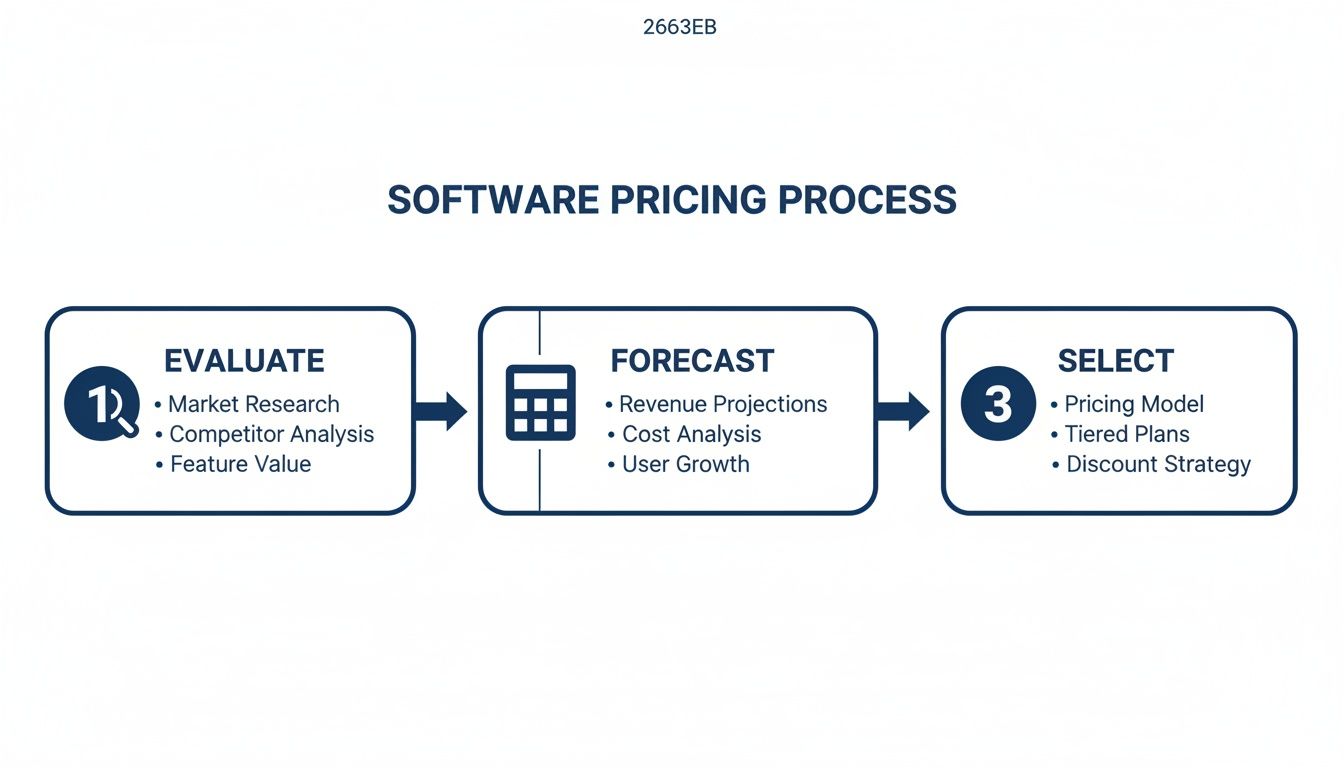
This visual guide reinforces a structured approach, making sure you evaluate what you need, forecast the costs, and ultimately select a plan that fits both your budget and your operational goals.
Cultivating Your Contract Champion
Every successful software rollout I've seen has a "champion"—that one person on the team who is genuinely excited about the new tool and can help others see the light. This person isn’t always a manager. More often than not, it's the most organized person in the office or someone who is deeply frustrated with the old, messy way of doing things.
Find this person early. Get them involved in the setup process, give them a little extra training, and empower them to be the go-to resource for their colleagues. Their authentic enthusiasm will be far more convincing than any top-down directive.
A coworker showing another coworker how to save 15 minutes finding a document? That's the most powerful training session you could ever ask for.
Using AI for Smarter Contract Review
Modern contract management software for small business is so much more than a digital filing cabinet these days. The best tools now come with built-in artificial intelligence that helps you understand what's actually inside your contracts. This gives you a level of insight that, until recently, was really only accessible to large companies with big legal teams.
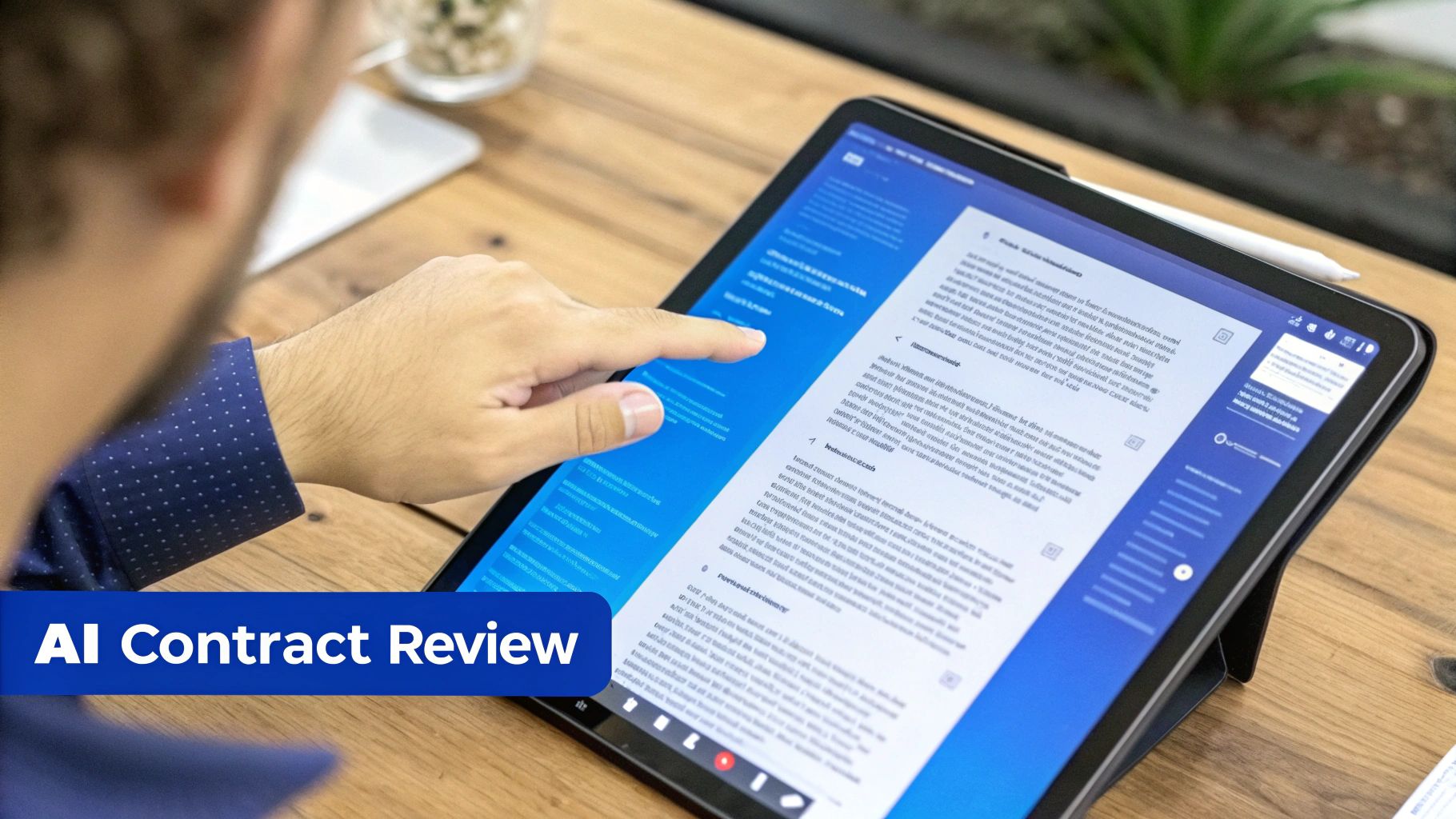
Let's be clear: this isn't about replacing your lawyer. Think of it as having a powerful assistant working alongside you. AI tools can tear through dense legal documents in seconds, flagging potential problems and translating confusing jargon into plain English before a contract ever gets locked into your system.
From Simple Storage to Strategic Analysis
Imagine you run a small e-commerce store and you're about to sign with a new shipping partner. They send over a contract that's 20 pages long, dense with clauses about liability, indemnification, and termination.
Instead of spending hours trying to make sense of it—or paying a lawyer just for a first look—you could use an AI assistant like LegesGPT. You just upload the document, and in moments, you get a clear, digestible summary.
- Spotting Risky Clauses: The AI might instantly flag a one-sided indemnification clause that could leave your business on the hook for the shipping company's mistakes.
- Pulling Out Key Terms: It can extract the must-know details like auto-renewal dates, price increase notice periods, and how to terminate the agreement.
- Giving You Plain-English Summaries: The tool explains what the "limitation of liability" section actually means for your bottom line in simple, straightforward terms.
This kind of proactive risk analysis is a total game-changer. It helps you find potential red flags and go back to the negotiating table with specific, well-informed questions. For a more detailed look, this guide on contract management artificial intelligence has some great insights into how these workflows are evolving.
AI acts as your first line of defense. It empowers you to truly understand the commitments and risks you're taking on, turning contract review from a painful chore into a proactive business strategy. For tools built specifically for that, see the best AI contract review software.
How AI Boosts Your Workflow
This technology isn't just for new agreements, either. You can apply it to your entire library of existing contracts. An AI-powered system can scan everything you have on file to find non-standard clauses, locate all agreements missing a specific data privacy clause, or generate a report of every contract set to auto-renew next quarter.
This capability turns your static contract archive into a living, searchable database.
The same approach is incredibly valuable for other common business documents. For instance, getting the details right in an employment offer is critical, whether you're the one hiring or the one being hired. You can check out our guide on how to review an employment contract with AI tools to see how it works in practice.
By adding AI to the mix, your contract management platform becomes an active partner in protecting your business and finding hidden opportunities.
Frequently Asked Questions
What's a Realistic Budget for a Small Business?
For most small businesses, you can expect to find solid entry-level platforms in the $50 to $500 per month range. Where you land in that spectrum really comes down to the pricing model—is it based on how many users you have, the volume of contracts, or a tiered plan with different feature sets? My advice? Always dig deeper than the sticker price. Ask vendors directly about one-time setup charges, data migration fees, or any mandatory training costs that might not be obvious. Before locking into a discounted annual plan, always, always start with a free trial. You need to be sure it actually works for your team in the real world.
Can’t I Just Use Asana or Trello for This?
I get this question a lot. And while you can technically dump a deadline into a project management tool like Asana or Trello, you'd be missing the entire point of dedicated contract software. Those tools simply weren't built for this. They lack the essentials: a secure and searchable contract repository, automated alerts for obligations and renewals, detailed version control, and any real compliance tracking features. Trying to jury-rig a solution with them creates a ton of manual work and opens you up to huge risks. One missed auto-renewal or a compliance oversight can cost you far more than a proper software subscription.
How Do I Get All My Old Contracts Into the New System?
The thought of moving years of contracts can feel daunting, but it's usually more straightforward than you think. Most modern platforms have figured this out and give you a few ways to handle it. Typically, you'll see options like: • Bulk PDF Uploads: This is the most basic method. You just grab your files and upload them in batches. • AI Data Extraction: This is a more advanced (and often extra cost) feature where the software scans your documents and automatically pulls out the important stuff—key dates, clauses, party names, and more. > Here's a practical tip to avoid getting overwhelmed: Don't try to migrate everything at once. Start by manually uploading your most critical, active contracts first—your biggest clients, key vendors, and master service agreements. You can always work backward and add the less active agreements over time.
What’s the Difference Between Contract Management and CLM?
You'll run into these terms, and the distinction is pretty simple. Contract management is mostly concerned with what happens after a contract is signed. Think of it as the storage and monitoring phase: keeping agreements organized, tracking key dates and obligations, and making sure everyone is following the terms. Contract Lifecycle Management (CLM) is the whole shebang. It covers the entire journey of a contract, from the initial drafting and back-and-forth negotiation all the way through approvals, signing, and its eventual renewal or termination. For most small businesses, a tool that nails the core "management" part is where you'll see the biggest and fastest return. --- Ready to stop juggling spreadsheets and start managing contracts with confidence? LegesGPT offers an AI-powered platform to review documents, extract key terms, and keep all your agreements secure and accessible. Discover how our tools can bring clarity and control to your contract workflow. Try it free today.