

For decades, legal research came down to one question: Westlaw or LexisNexis? The two platforms have anchored law firm research budgets, law school training, and litigation workflows since long before AI entered the picture. Both are deep, both are trusted, and both are expensive enough that choosing between them is a real budget decision.
In 2026 the question is sharper, because both have layered AI on top of their classic databases, and a new generation of affordable, browser-based tools now does much of the same research work for a fraction of the price. This guide compares Westlaw and LexisNexis head to head on features, pricing, citators, AI, and coverage, then introduces LegesGPT as a lighter, self-serve alternative for lawyers who find both giants heavier and pricier than they need.
The quick verdict
- Westlaw is the pick if you want the deepest editorial tooling and the KeyCite citator, and your firm already budgets for premium research.
- LexisNexis is the pick if you live in the Lexis ecosystem, value Shepard's, and want the Protégé AI assistant grounded in Lexis content.
- LegesGPT is the pick if you want verified-citation answers, case law and statute search, document review, and drafting in one self-serve plan from $19.99/month, without an enterprise contract.
Both Westlaw and LexisNexis are excellent, and genuinely close on core research. The honest tiebreaker for most solos and small firms is price and whether you need the full editorial library at all.
Westlaw
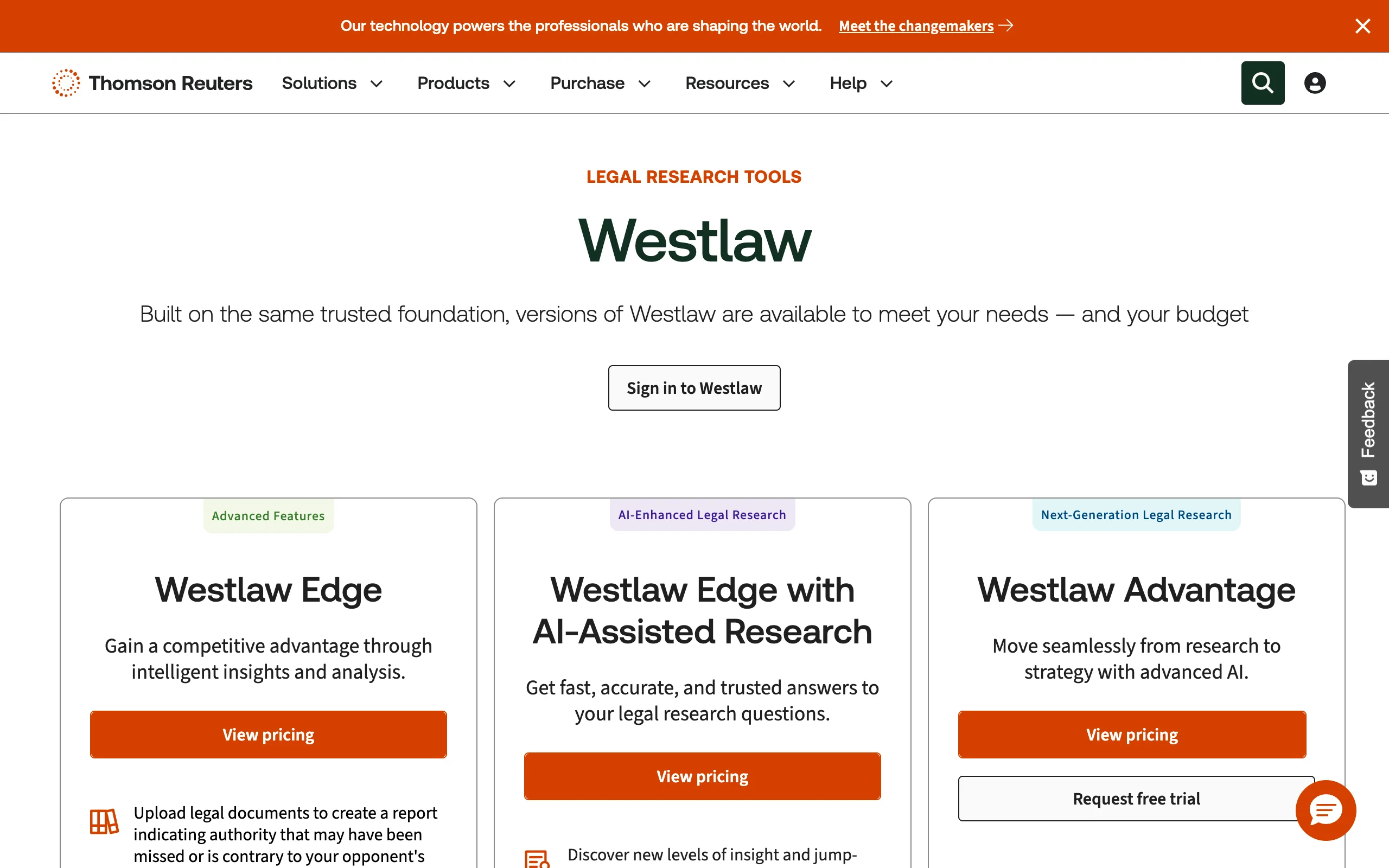
Westlaw, Thomson Reuters' flagship research platform, is the tool many litigators reach for first. It pairs comprehensive primary law with the largest editorial layer in the market: headnotes, the Key Number System, and an enormous secondary-source library. Its KeyCite citator is the reason a lot of firms stay, and recent AI-assisted research plus the CoCounsel assistant add agentic, multi-step workflows on top of that foundation.
Key features
- KeyCite citator for checking whether a case is still good law
- Headnotes and the Key Number System for navigating issues
- Deep case law, statutes, regulations, and secondary sources
- AI-assisted research and the CoCounsel assistant for drafting and analysis
Pricing
- Quote-only; Thomson Reuters does not publish rates
- Tiered (Classic, Edge, Precision, Advantage); reported solo and small-firm rates run from roughly $133 to $381 per user per month, climbing with content bundles and AI tiers
- The premium AI tiers are not publicly priced, so confirm with the vendor
Key considerations
- Best-in-class editorial tools and citator, but priced for firms that use them daily
- The newest AI features sit in higher tiers, adding cost on top of the base subscription
LexisNexis
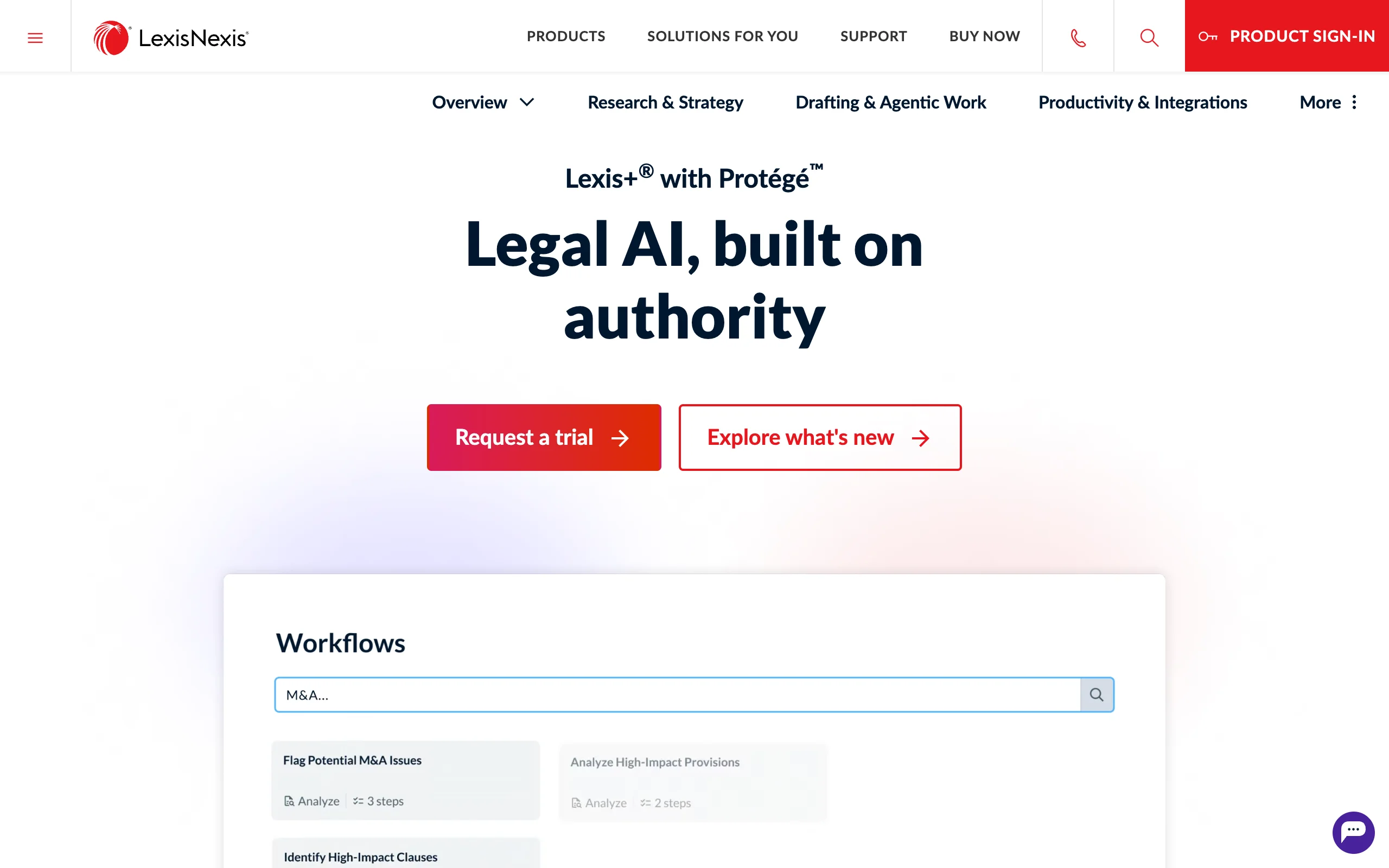
LexisNexis, now delivered as Lexis+ with Protégé (the platform that replaced Lexis+ AI in early 2026), is Westlaw's closest rival and matches it on research depth. Its Shepard's citator is the direct counterpart to KeyCite, and the Protégé assistant grounds AI answers in Lexis content while running multi-step agentic workflows. Drafting inside Microsoft Word happens through the Lexis Create+ plug-in rather than a native editor.
Key features
- Shepard's citator for validating case treatment
- Protégé AI assistant grounded in Lexis sources, with agentic workflows
- Case law, statutes, regulations, and Practical Guidance across practice areas
- Lexis Create+ plug-in for drafting in Word
Pricing
- Quote-only, seat-based subscription with custom pricing
- Third-party estimates put standard Lexis+ near $80 to $135 per user per month, with AI/Protégé tiers reported from roughly $128 to $494 per user per month
- Pricing depends on firm size, content, and negotiation, so confirm with the vendor
Key considerations
- Shepard's and Practical Guidance are mature and widely trusted
- Like Westlaw, the strongest AI features and full coverage push toward the higher tiers
LegesGPT, the affordable alternative
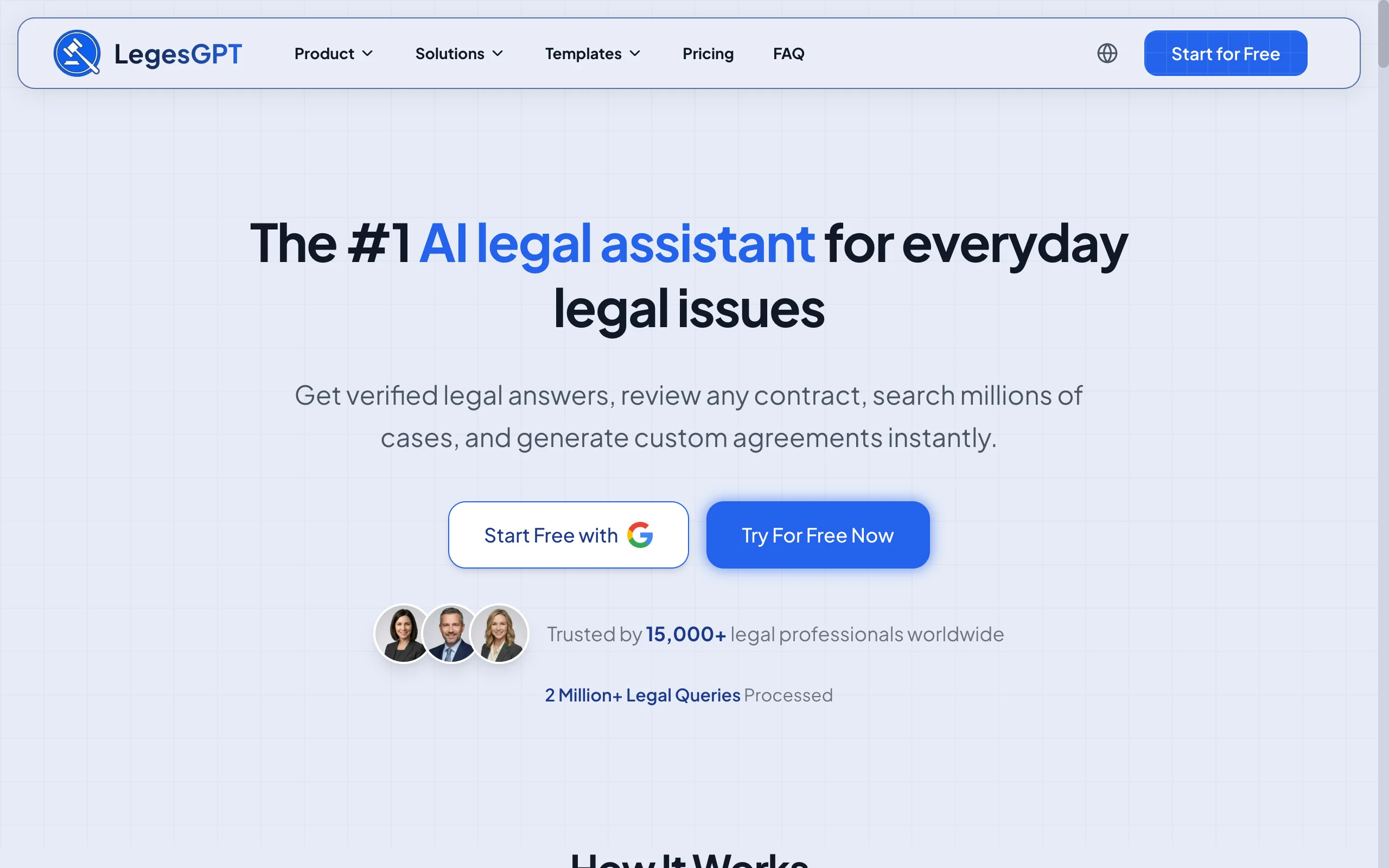
LegesGPT approaches the same work from the opposite direction: instead of a deep editorial library you license per seat, it is an AI assistant that answers legal questions with verified citations and clickable source links, searches case law and statutes, reviews uploaded documents to flag risks and propose fixes, and drafts contracts and documents, all in one browser app. There is no add-in to install and no sales call to start. For the everyday research and drafting most solos and small firms actually do, it covers the ground at a fraction of the price.
Key features
- Legal questions answered with verified citations and direct source links
- Case law and statute search, with a Deep Research mode for multi-step questions
- AI document review that flags risky clauses, proposes edits, and summarizes in plain language
- AI drafting of contracts and documents, e-signature, and 100+ attorney-drafted templates
Pricing
- Basic, $19.99/month: unlimited AI queries, case law and statute search, citation verification
- Plus, $49.99/month: adds document and image upload plus 50 document reviews/month
- Premium, $99.99/month: adds unlimited document review, Deep Research, and web search
- 3-day trial ($1 activation) and roughly 30% off annual billing. See full LegesGPT pricing.
Why solos and small firms pick LegesGPT
- Transparent, self-serve pricing with no seat minimums or enterprise contract
- Verified citations make answers fast to check before you rely on them
- Research, review, drafting, and signing in one subscription, not three tools
- Honest limit: it is a newer brand without Westlaw's or Lexis's exhaustive secondary-source library, and it is web-only (no native mobile app, public API, or Word add-in)
Westlaw vs LexisNexis vs LegesGPT: key differences
| Feature | Westlaw | LexisNexis | LegesGPT |
|---|---|---|---|
| Primary focus | Full-service research + editorial tools | Full-service research + practical guidance | AI research, review, and drafting |
| Citator | KeyCite | Shepard's | Verified citations (no formal citator) |
| AI assistant | CoCounsel / AI-assisted research | Protégé | Built-in, with source links |
| Pricing | Quote-only (~$133–$381/user/mo reported) | Quote-only (~$80–$494/user/mo reported) | From $19.99/mo, self-serve |
| Coverage | US primary + deep secondary | US primary + Practical Guidance | Case law, statutes, 38+ countries |
| Platform | Web, Word add-in | Web, Lexis Create+ for Word | Browser app, no add-in |
| Best for | Litigation, research-heavy firms | Lexis-ecosystem firms | Solos, small firms, in-house on a budget |
The pattern is clear. Westlaw and LexisNexis are near-peers built for firms that need an exhaustive research library and a formal citator, and price accordingly. LegesGPT trades the giant editorial library for verified-citation answers, document review, and drafting in one affordable, self-serve plan.
Which option is right for you?
You do heavy litigation and live in secondary sources
Stay with a full-service database. Choose Westlaw for KeyCite and the Key Number System, or LexisNexis for Shepard's and Practical Guidance. If you already use one, the switching cost rarely pays off on research depth alone.
You mostly need reliable answers, case law, and drafting
LegesGPT covers everyday research with verified citations, plus document review and drafting, in one plan from $19.99/month, no enterprise contract required. Test it on your own questions before paying for a premium seat you may not fully use.
You want AI but not a second subscription
Westlaw (CoCounsel) and LexisNexis (Protégé) both layer AI onto their databases, but the strongest features sit in higher tiers. LegesGPT builds AI in from the start at a self-serve price, so you are not paying enterprise rates to get a modern assistant.
Whatever you shortlist, run three to five of your real research questions through each tool, check the citations against the source, and compare the price-to-value math. For a wider view of the category, see our guide to the best legal research tools for lawyers.
Frequently Asked Questions
Is Westlaw or LexisNexis better in 2026?
Neither wins outright. They are near-peers on core research: Westlaw leads on editorial tooling and the KeyCite citator, while LexisNexis leads inside its own ecosystem with Shepard's and Practical Guidance. For most firms the deciding factors are price, which citator you trust, and which platform your team already knows.
What is the difference between KeyCite and Shepard's?
KeyCite (Westlaw) and Shepard's (LexisNexis) are citators that tell you whether a case is still good law and how later courts treated it. They cover similar ground with different editorial signals and flags. Both are mature and widely relied on, and each is tied to its own platform.
Is there a cheaper alternative to Westlaw and LexisNexis?
Yes. LegesGPT starts at $19.99/month with transparent self-serve pricing and answers questions with verified citations, searches case law and statutes, reviews documents, and drafts. Because Westlaw and LexisNexis quote pricing privately, the most reliable comparison is to get a quote from each and weigh it against a tool you can test today.
Can I replace Westlaw or LexisNexis with an AI tool?
For everyday research, drafting, and document review, an AI tool like LegesGPT can cover most of what solos and small firms use the big databases for. For exhaustive secondary-source research, formal citator validation on high-stakes matters, or specialized litigation work, the legacy databases still do more. Many lawyers pair an affordable AI tool with selective access to a citator.
Do Westlaw and LexisNexis both have AI now?
Yes. Westlaw offers AI-assisted research and the CoCounsel assistant; LexisNexis offers the Protégé assistant grounded in Lexis content. In both cases the most capable AI features are concentrated in higher-priced tiers, on top of the base research subscription.
I mainly need affordable research with citations plus drafting. What should I use?
LegesGPT is built for exactly that. It answers legal questions with verified citations and source links, searches case law and statutes, reviews documents, and drafts, in one self-serve subscription from $19.99/month with a 3-day trial, so you can test it on your own work before committing to an enterprise research contract.