Court deadlines are unforgiving. File an opposition or a notice of appeal a day late and the court may refuse it, no matter how strong your argument. The good news: computing a deadline follows a repeatable, four-step method. Once you know it, you can calculate almost any filing or response deadline with confidence — and check your work with a legal deadline calculator.
The four-step method
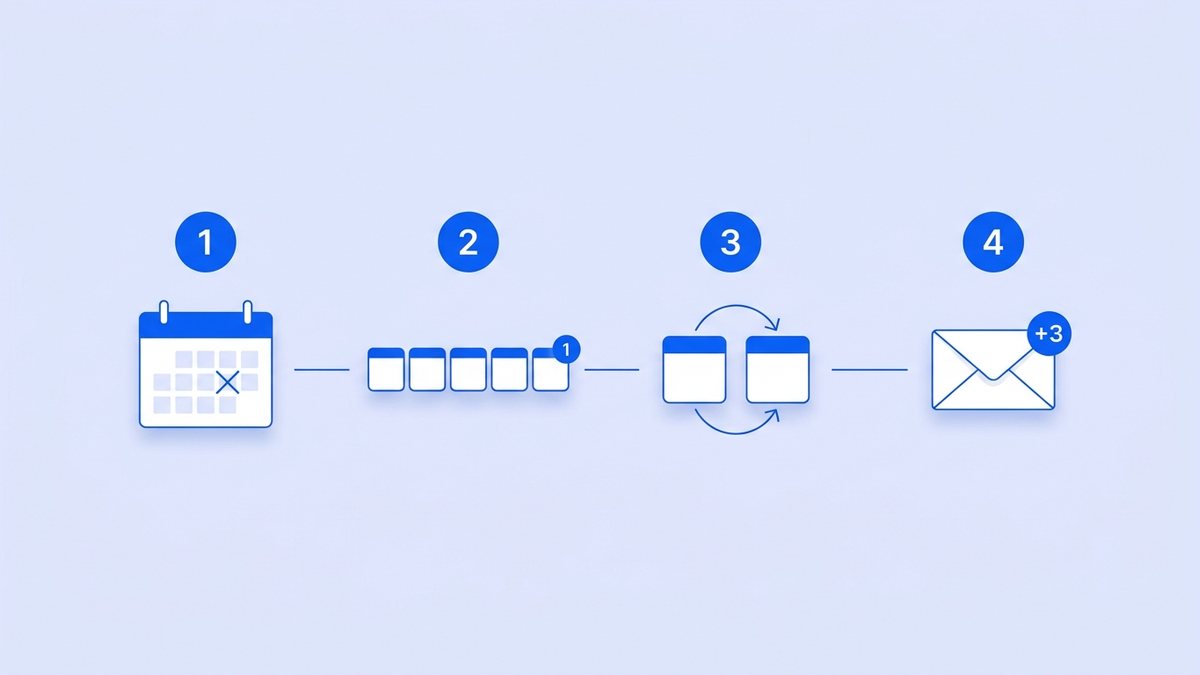
Every deadline calculation answers four questions, in order:
- What event starts the clock, and do you count that day?
- Do you count calendar days or court days?
- What happens if the last day is a weekend or holiday?
- Does the method of service add extra time?
Step 1: Find the triggering event — and skip that day
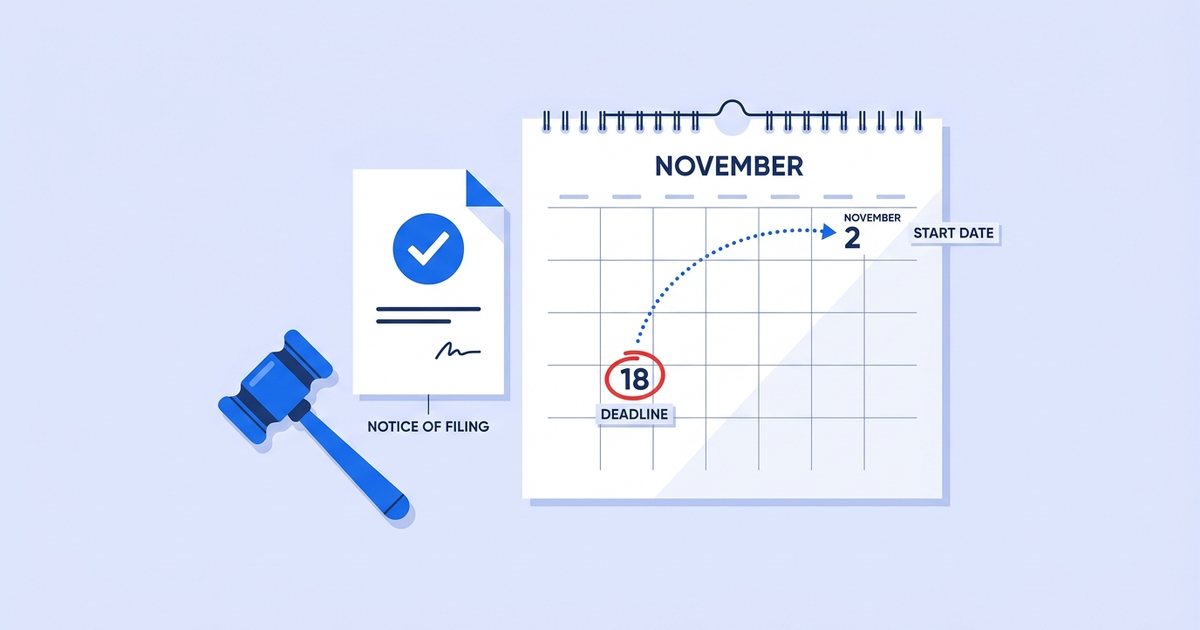
Every deadline runs from a triggering event: service of a complaint, entry of an order, service of a discovery request. Under FRCP 6(a)(1)(A), you exclude the day of the event and start counting the next day. If a complaint is served on the 1st, day 1 is the 2nd.
Step 2: Count the days — calendar or court?
Next, count forward the number of days the rule gives you. The critical question is which kind of day:
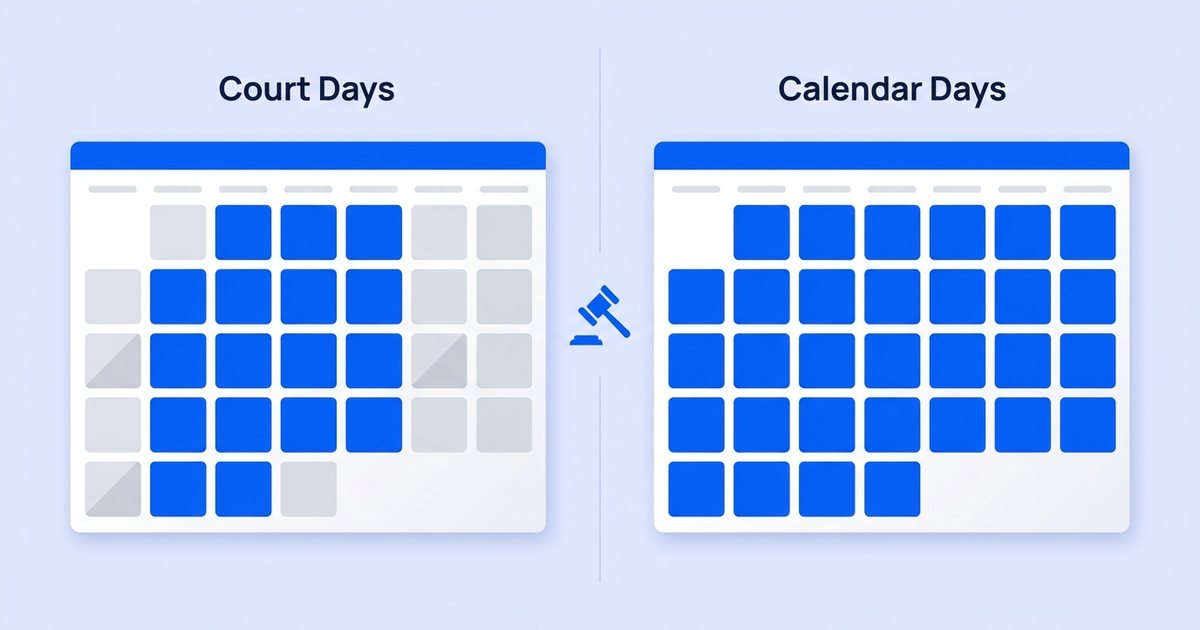
- Calendar days — count every day, including weekends and holidays. Most federal periods and statutes of limitations work this way.
- Court days — count only days the court is open, skipping weekends and holidays.
Reading the rule matters: "within 21 days" means calendar days, while "16 court days" means court days. If you are unsure of the difference, see our guide on court days vs. calendar days.
Step 3: Roll the last day off weekends and holidays
Under FRCP 6(a)(1)(C), if the last day of a calendar-day period falls on a Saturday, Sunday, or legal holiday, the deadline continues to the next day that is not a weekend or holiday. (For a court-day count you have already skipped those days, so the last day is always a court day.)
Federal courts observe the 11 holidays in 5 U.S.C. § 6103 — New Year's Day, MLK Day, Washington's Birthday, Memorial Day, Juneteenth, Independence Day, Labor Day, Columbus Day, Veterans Day, Thanksgiving, and Christmas — plus, for periods measured after an event, holidays declared by the state where the court sits.
Step 4: Add time for the method of service — the 3-day mail rule
Service can add days. Under FRCP 6(d), when a party may or must act within a period after being served and service is made by mail (or certain other listed methods), 3 days are added after the period would otherwise end. So a 21-day response to a mailed pleading effectively becomes 24 days.
States handle this differently and often more generously. California's CCP § 1005(b), for instance, adds 5 calendar days for mail service within California on top of its 16-court-day motion notice.
Worked example: a federal answer deadline
A defendant is personally served with a summons and complaint on Monday, June 1.
- Trigger: June 1. Exclude it; day 1 is June 2.
- Count: A defendant generally must answer within 21 days of service under FRCP 12(a)(1)(A)(i). Counting 21 calendar days from June 2 lands on Monday, June 22.
- Roll: June 22 is a weekday and not a holiday, so no adjustment is needed.
- Service: Personal service, so no 3-day mail addition applies.
The answer is due June 22. Had the complaint been served by mail, Rule 6(d) would push it to June 25.
Backward-counted deadlines
Some deadlines run backward from a hearing — you must act a set number of days before a date. Count back from the hearing, excluding the hearing day itself. California codifies this in CCP § 12c: determine the last day by counting backward, then apply any service-based extension. Our court date calculator counts in both directions.
Federal vs. state: never assume
The method above is the federal baseline. States vary on how many days a rule gives, whether it counts court or calendar days, which holidays apply, and how much time service adds. A period that is 30 calendar days in one court may be counted differently next door. Always calculate against the rule that governs your case.
Calculate it in seconds
The legal deadline calculator applies common FRCP and FRAP rules by case type and event, and auto-adjusts for weekends and federal holidays. To count a custom number of court or calendar days from any date, use the court date calculator.
This guide is general information, not legal advice. Rules and holidays vary by jurisdiction and change over time — confirm the governing rule and consult a licensed attorney for anything that affects your rights.
Frequently Asked Questions
How do you calculate a court deadline?
Use four steps. First, find the triggering event and do not count that day. Second, count forward the number of days the rule gives you, in calendar days or court days as the rule specifies. Third, if the last day of a calendar-day period lands on a weekend or holiday, roll it to the next open day. Fourth, add any time the method of service requires, such as the 3-day mail rule.
Do you count the day of the triggering event?
No. Under FRCP 6(a)(1)(A) you exclude the day of the event that starts the clock and begin counting the next day. If a complaint is served on the 1st, day one is the 2nd.
What is the 3-day mail rule?
Under FRCP 6(d), when a party may or must act within a set period after being served and service is made by mail (or certain other methods), 3 days are added after the period would otherwise end. A 21-day response to a mailed pleading effectively becomes 24 days. Many states add more; California adds 5 calendar days for in-state mail service.
What happens if a court deadline falls on a weekend or holiday?
Under FRCP 6(a)(1)(C), if the last day of a period is a Saturday, Sunday, or legal holiday, the deadline continues to the next day that is not a weekend or holiday. Intermediate weekends and holidays are still counted; only the last day rolls.
Are federal and state court deadlines calculated the same way?
No. Federal deadlines under FRCP 6(a) count every calendar day, excluding the trigger day, with only the last day rolling off weekends and holidays. Many states differ on the number of days, whether they count court days or calendar days, which holidays apply, and how much time service adds. Always calculate against the rule that governs your case.