
Compliance work never slows down. Regulators publish new rules and guidance every week, and compliance lawyers are expected to catch each change, translate it into updated policies, and confirm that contracts and internal procedures still hold up. Doing that by hand means reading thousands of pages and hoping nothing slips through.
AI tools for compliance lawyers now handle much of that grind: monitoring regulatory feeds, mapping requirements to your policies, reviewing contracts for problem language, and answering research questions with citations you can actually verify.
In this guide we compare the best AI tools for compliance lawyers in 2026, with pricing, strengths, honest trade-offs, and a framework for picking the right one for your team.
Best AI tools for compliance lawyers: a brief overview
- LegesGPT: Best overall for compliance counsel and small legal-compliance teams: verified-citation research on statutes and regulations, web search for recent developments, and document review that flags problem language in policies and contracts, from $19.99/mo.
- Firecrawl: Best for regulatory source research and change monitoring: searches a free index of 30 million US government pages, pulls official records from providers like CourtListener, SEC EDGAR and the OFAC sanctions list through Firecrawl Alexandria, and alerts you when a regulator page changes.
- Compliance.ai (Archer): Best for regulatory change monitoring in financial services: filters agency updates and enforcement actions down to what actually applies to your institution.
- 4CRisk.ai: Best for mapping regulations to internal policies and controls: its Compliance Map product finds gaps between requirements and your existing artifacts in minutes.
- CoCounsel (Thomson Reuters): Best for compliance teams already on Westlaw or Practical Law: AI research and document analysis layered on Thomson Reuters content.
- Harvey: Best for enterprise legal departments: custom workflow agents and secure bulk document analysis for large, security-conscious organizations.
- Regology: Best for multi-country regulatory coverage: an AI-maintained law library tracking regulators across 135+ countries.
- Drata: Best for security-framework compliance automation: continuous monitoring and evidence collection for SOC 2, ISO 27001, GDPR, and similar frameworks.
| Tool | Best for | Starting price | Free trial | Coverage |
|---|---|---|---|---|
| LegesGPT | Compliance counsel and small legal teams | From $19.99/mo | 3-day, $1 | 38+ countries |
| Firecrawl | Regulatory sources and change monitoring | Free; from $16/mo billed annually | Free plan, 1,000 Firecrawl credits/mo | 30M US government pages; EU, UK and Canadian law via providers |
| Compliance.ai | Regulatory change monitoring (finserv) | Custom | Trial on request | Primarily US regulators |
| 4CRisk.ai | Mapping regulations to policies | Custom | Free evaluation | US + global standards |
| CoCounsel | Teams already on Westlaw | Custom (configurator) | Essentials only | Primarily US |
| Harvey | Enterprise legal departments | Custom (enterprise) | Demo only | Global, 500+ sources |
| Regology | Multi-country regulatory tracking | From $1,700/user/mo | Free Reggi plan (US) | 135+ countries |
| Drata | Security-framework automation | Custom | Demo only | SOC 2, ISO 27001, GDPR + |
1. LegesGPT, best overall for compliance counsel and small legal-compliance teams
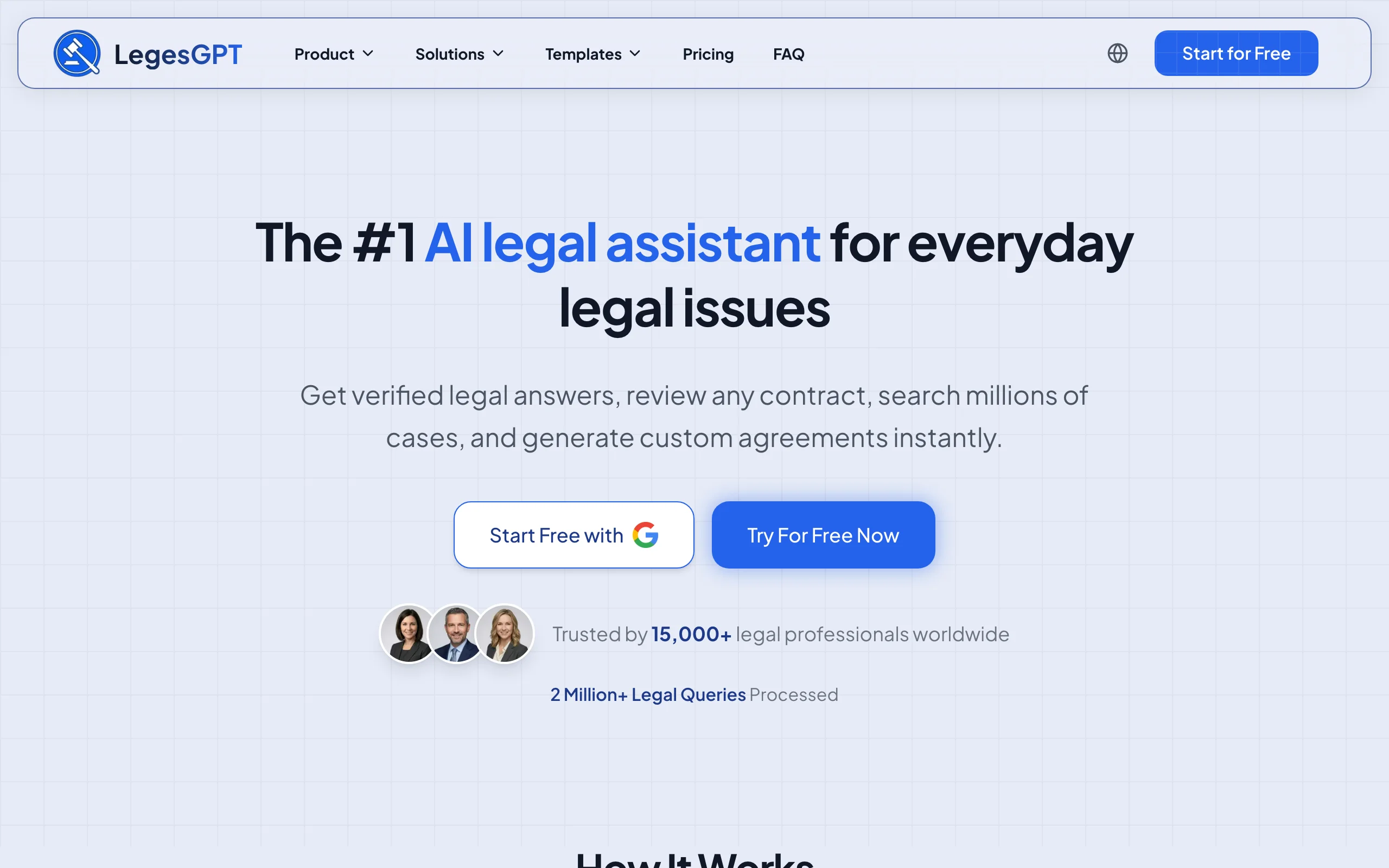
LegesGPT covers the three tasks that eat most of a compliance lawyer's week: researching what a rule actually requires, checking documents against those requirements, and keeping up with what changed. Ask it a regulatory question and it answers with verified citations and direct links to the underlying statutes and cases, so you can defend the answer to an auditor or a board. Upload a policy or contract and its document review identifies risks, flags problematic clauses, and proposes corrected language. On the Premium plan, web search pulls in recent regulatory developments and Deep Research works through multi-step questions, such as how a new rule interacts with existing state requirements.
Key features:
- Answers regulatory and legal questions with verified citations and direct source links
- Ability to search case law and statutes to trace a requirement back to its source
- Document review that checks policies and contracts, flags problem language, and proposes changes (PDF, DOCX, PPTX, TXT, images)
- Web search integration for recent regulatory developments (Premium)
- Deep Research mode for multi-step regulatory questions (Premium)
- AI drafting plus e-signature for updated policies, notices, and agreements
Best for:
- Solo compliance counsel and legal-compliance teams of 1-10 who need research and review without an enterprise contract
- In-house lawyers who own compliance alongside contracts and general legal work
- Teams that need citation-backed answers they can defend in an audit
Pricing:
- Basic at $19.99/mo: unlimited AI queries, case law and statute search, citation verification
- Plus at $49.99/mo: adds document upload and 50 document reviews per month; Premium at $99.99/mo: unlimited document review, Deep Research, and web search
- 3-day trial for $1; roughly 30% off with annual billing
Pros:
- Research, document review, drafting, and e-signature in one subscription, at a fraction of enterprise legal AI pricing
- Every answer carries citations you can click and verify, which matters when a regulator asks how you reached a conclusion
- Self-serve signup with an instant $1 trial; no sales cycle, no seat minimums
Cons:
- Web-only: no API, mobile app, or Word add-in
- No automated regulatory-alert feeds; you run the research rather than receiving push notifications when a rule changes, unlike dedicated change-management platforms such as Compliance.ai
Check your policies and contracts against the rules
Upload a contract and LegesGPT flags risky clauses, surfaces obligations and deadlines, and answers questions with citations you can verify.
Try AI document review2. Firecrawl, best for regulatory source research and change monitoring
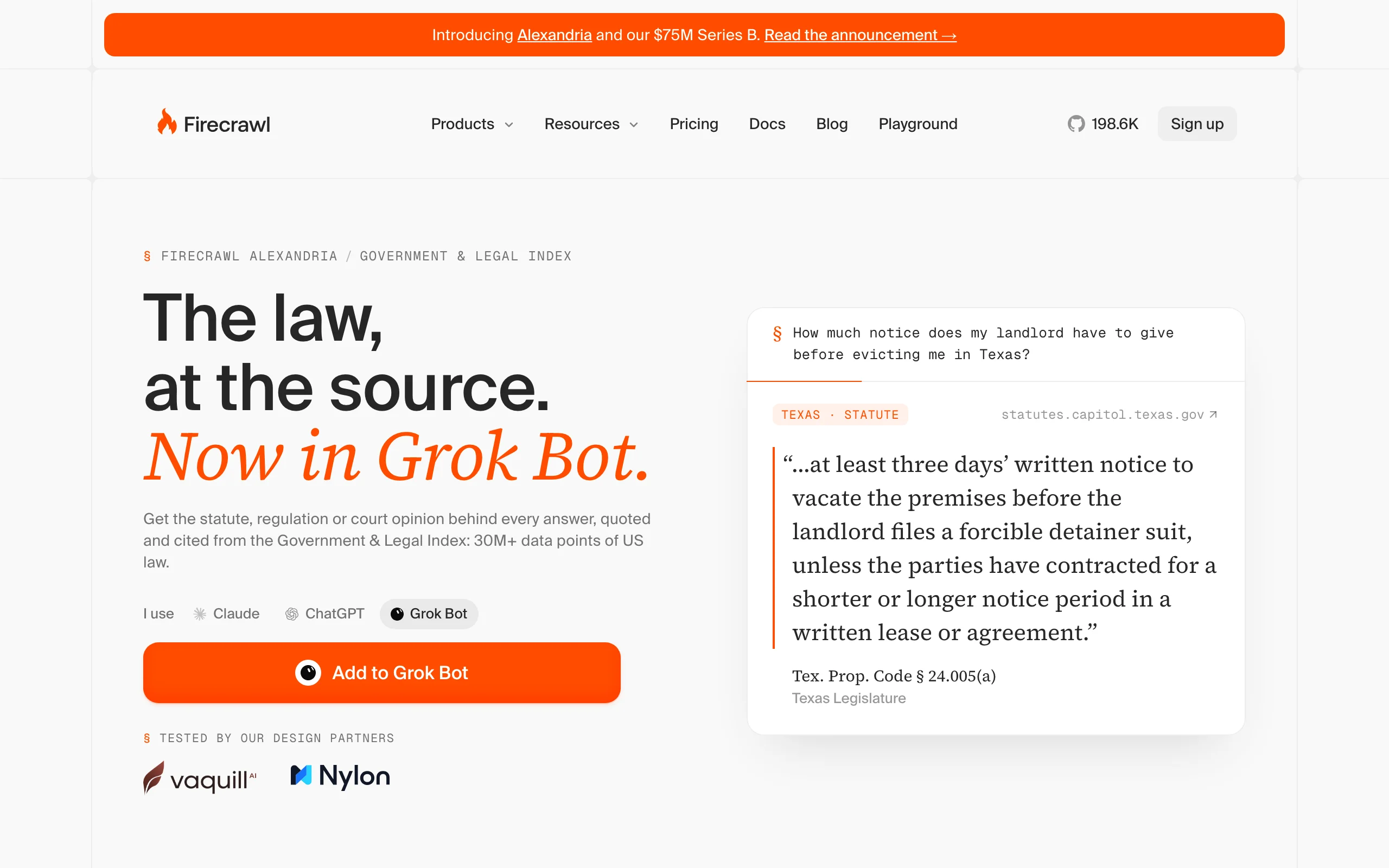
Firecrawl is the context API for AI agents, and compliance teams use it to find a rule, cite the official source and watch for changes. Firecrawl Alexandria connects ChatGPT, Claude or your own tools to official data providers and Firecrawl's own indexes. One of them is the free Government & Legal Index: 30 million US federal, state, county and city pages, from statutes and regulations to agency guidance and municipal codes.
For citations, Firecrawl Alexandria reaches official legal sources directly. That covers court opinions on CourtListener, legislation on EUR-Lex, legislation.gov.uk and Canada's Justice Laws Website, the OFAC and UN Security Council sanctions lists, and company filings on SEC EDGAR. Firecrawl Monitor then checks the regulator and agency pages you pick, as often as every 5 minutes. It sends what changed by email, Slack or webhook.
Key features:
- Free Government & Legal Index of 30 million US government pages, each linked to the laws and cases it cites
- Firecrawl Alexandria access to official legal and public records providers, including CourtListener, EUR-Lex, OFAC and SEC EDGAR
- Firecrawl Monitor with up to 50 pages or sites per monitor and checks as often as every 5 minutes
- Change reports that mark each page as new, changed or removed
- Works in ChatGPT and Claude with no code, plus the Firecrawl MCP server for Cursor and Claude Code, a CLI and an API
Best for:
- Compliance counsel who want alerts from specific regulator and agency pages, not a general news feed
- Teams that need official, citable sources for rules, court opinions, sanctions and filings inside ChatGPT or Claude
- Legal ops and legal tech teams building their own regulatory tracking agents
Pricing:
- Government & Legal Index searches are free and use no Firecrawl credits
- Free plan with 1,000 Firecrawl credits a month and no credit card; paid plans run from Hobby at $16/mo (5,000 credits) to Scale at $599/mo (1,000,000 credits), billed annually
- Firecrawl Monitor costs 1 Firecrawl credit per page per check
Pros:
- One connection covers finding the rule, citing the official source and tracking changes
- Search results link back to the official government page, so every citation stays checkable
- SOC 2 Type 2 compliant, and trusted by over a million developers and thousands of enterprise teams
Cons:
- Built to find and monitor official sources, not to draft legal memos
- The free Government & Legal Index covers US government sources
3. Compliance.ai (Archer), best for regulatory change monitoring in financial services
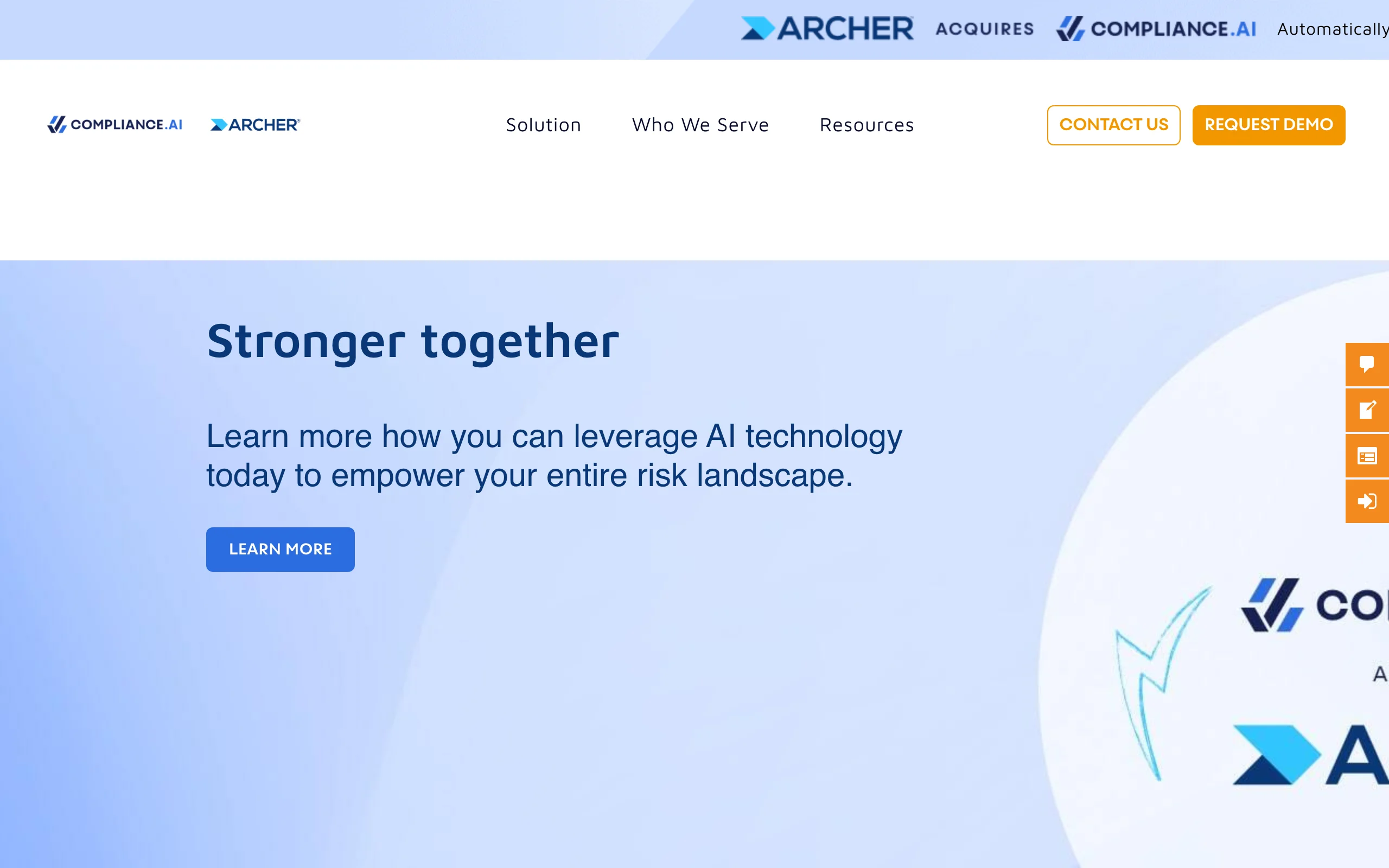
Compliance.ai, now part of Archer, is a dedicated regulatory change management platform built for banks, insurers, and fintechs. Its core job is horizon scanning: it monitors regulatory updates from agencies and other sources, then filters that firehose so each compliance specialist sees only what applies to their institution. The platform extracts obligations from new documents, tracks SEC and FTC enforcement actions in near real time, and routes changes through standardized, auditable workflows. Its "Expert in the Loop" methodology pairs AI classification with human regulatory experts, which helps when a misclassified rule could mean a missed obligation.
Key features:
- Automated monitoring and relevance filtering of regulatory updates across agencies
- Obligation extraction from new rules and guidance
- SEC and FTC enforcement action tracking
- Auditable change-management workflows with task assignment across departments
- Configurable dashboards showing compliance issues enterprise-wide
Best for:
- Compliance departments at banks, insurance companies, and fintechs
- Chief compliance officers who need an auditable record of how each regulatory change was handled
Pricing:
- Custom pricing only; no published tiers (quote via sales)
- Demo and trial access on request; free weekly regulatory report emails
Pros:
- Purpose-built for the regulatory change workflow, from detection to assigned remediation tasks
- Human expert review layered on the AI reduces misclassified obligations
Cons:
- Focused on US financial services regulators; less useful outside that vertical
- Opaque pricing and a sales-led process; not practical for small teams
- Monitors and routes changes but is not a legal research assistant; you still need a separate tool to analyze what a rule means
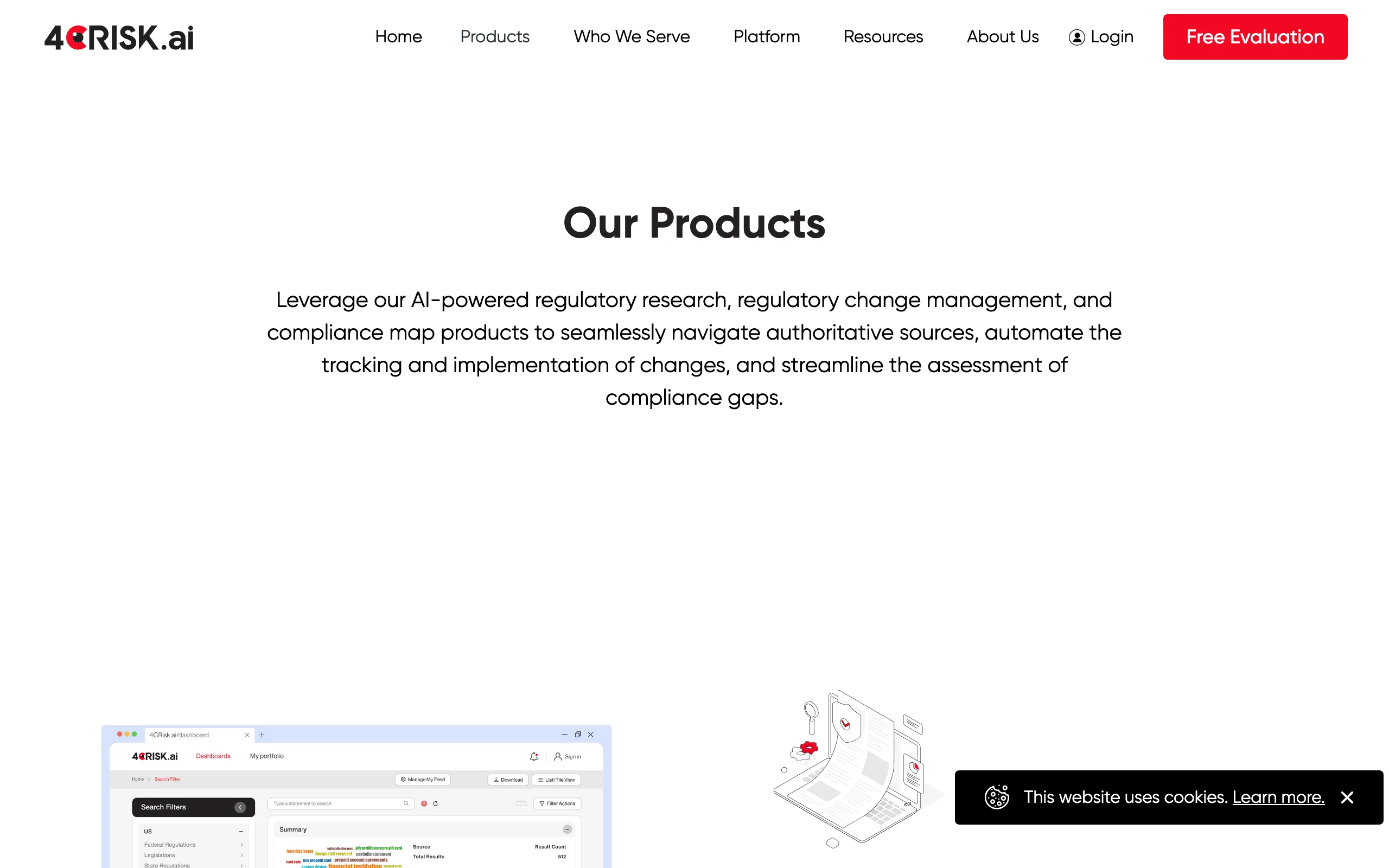
4. 4CRisk.ai, best for mapping regulations to internal policies and controls
4CRisk.ai answers a question every compliance lawyer dreads: does our documentation actually cover what the regulation requires? Its Compliance Map product uses AI to map regulatory requirements and standards against your internal artifacts, policies, procedures, risks, controls, and contracts, and surfaces the gaps in minutes instead of weeks of manual cross-referencing. The wider suite adds Regulatory Research, HorizonScan for curated change alerts, Regulatory Change Management, and Ask ARIA Co-Pilot, an AI assistant for compliance questions. The vendor claims horizon scanning up to 20x faster and applicability analysis 5x faster than manual review.
Key features:
- Compliance Map: AI gap analysis between regulations and internal policies, controls, and contracts
- HorizonScan: curated regulatory change alerts relevant to your organization
- Regulatory Change Management with automated tracking and applicability analysis
- Ask ARIA Co-Pilot for natural-language compliance questions
- Real-time traceability across control frameworks
Best for:
- Compliance and risk teams at banks, insurers, fintechs, retailers, and telecom or high-tech companies
- Teams facing a regulatory exam who need to prove requirement-to-policy coverage quickly
Pricing:
- Custom pricing, tiered by organization size and which of the five modules you license
- Free evaluation available on request
Pros:
- Gap analysis between rules and internal documents is a genuinely hard task that few tools automate this directly
- Modular: you can start with Compliance Map and add change management later
Cons:
- No published pricing; budgeting requires a sales conversation
- Built for compliance-program management rather than general legal research or contract work
5. CoCounsel (Thomson Reuters), best for compliance teams already on Westlaw
CoCounsel is Thomson Reuters' AI legal assistant, and for compliance lawyers its appeal is the content behind it: research runs against Westlaw's editorially maintained database, and Practical Law adds standard documents and know-how for compliance programs. CoCounsel handles document review, deposition preparation, research memos, and contract analysis through skill-based workflows. For a compliance team inside a firm or legal department that already pays for Thomson Reuters products, it adds AI leverage without introducing a new vendor. Bought standalone, it is one of the pricier options in this list.
Key features:
- AI research grounded in Westlaw's citation-checked legal database
- Document review and summarization across large document sets
- Practical Law integration for compliance standard documents and know-how
- Skill-based workflows: research memos, contract analysis, document comparison
Best for:
- Compliance counsel at firms or departments already licensing Westlaw or Practical Law
- US-focused teams that want AI answers backed by an editorial citation system
Pricing:
- No public price list; a self-serve configurator quotes firms up to 10 attorneys, sales handles larger teams
- Third-party configurator tracking reports roughly $104 to $639 per user/month depending on plan (CostBench, June 2026)
- Free trial available for the CoCounsel Essentials plan only
Pros:
- Westlaw-grounded answers carry weight in regulated industries
- Broad skill set covers research, review, and drafting in one assistant
Cons:
- Expensive per seat, and the best value requires bundling with other Thomson Reuters subscriptions
- Primarily US-centric coverage
- No dedicated regulatory change monitoring; it is a research and review assistant, not a horizon-scanning platform
6. Harvey, best for enterprise legal departments
Harvey is enterprise legal AI built for large law firms and in-house departments, and its compliance story centers on scale and security. Assistant answers legal, regulatory, and tax questions across domains; Vault stores and bulk-analyzes thousands of documents, useful for reviewing an entire policy library or contract portfolio against a new requirement; and Workflow agents can be tailored to recurring compliance processes. It integrates with Word, Outlook, iManage, and SharePoint, and draws on 500+ regional knowledge sources. Harvey itself is heavily certified (SOC 2 Type II, ISO 27001, 27701, and 42001), which matters to compliance buyers evaluating their own vendors.
Key features:
- Assistant for legal, regulatory, and tax research across jurisdictions
- Vault for secure storage and bulk analysis of large document sets
- Custom workflow agents for recurring processes
- Integrations with Word, Outlook, iManage, and SharePoint
- SOC 2 Type II and ISO 27001/27701/42001 certifications, GDPR and CCPA compliance
Best for:
- Legal and compliance departments at large enterprises and Am Law-scale firms
- Organizations with strict security review requirements for AI vendors
Pricing:
- Custom enterprise pricing only; no published rates and no self-serve option
- Third-party reports place annual contracts commonly at $50,000+ with minimum seat counts (CostBench, 2026)
Pros:
- Bulk document analysis at a scale smaller tools cannot match
- Deep integration into enterprise document ecosystems
Cons:
- Enterprise sales cycle and contract minimums put it out of reach for small teams
- Pricing opacity makes cost comparison difficult before procurement
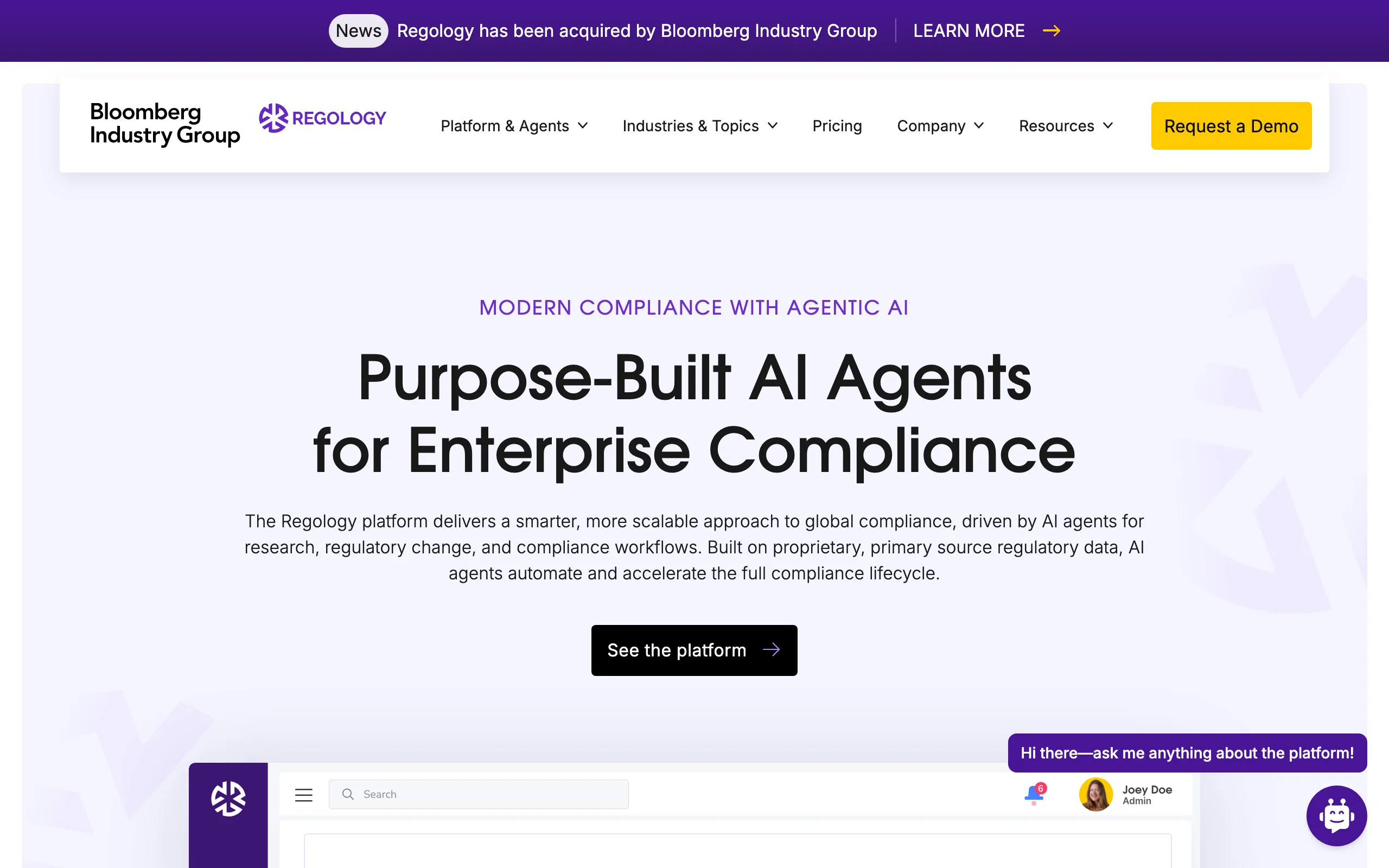
7. Regology, best for multi-country regulatory coverage
Regology, recently acquired by Bloomberg Industry Group, maintains what it calls a Smart Law Library: an AI-updated repository of laws and regulations tracked across 135+ countries from more than 10,000 data sources. Its Regulatory Change Agent delivers real-time alerts with structured summaries of what changed, the Compliance Agent translates developments into obligations, risks, and controls, and the Research Agent answers natural-language questions with cited responses and cross-jurisdictional comparisons. For a compliance lawyer covering products or operations in many countries, that breadth is the draw.
Key features:
- Smart Law Library tracking regulatory content across 135+ countries
- Regulatory Change Agent with real-time alerts and structured change summaries
- Compliance Agent that converts changes into obligations, risks, controls, and policy actions
- Research Agent with cited answers and cross-jurisdiction comparisons
- Reggi, a generative AI assistant for compliance queries
Best for:
- Compliance teams at multinationals tracking obligations across many jurisdictions
- Regulatory-intelligence functions in banking, crypto, gaming, and healthcare
Pricing:
- Free Reggi plan for individual use, limited to US laws and general questions
- Professional at $1,700/user/month on a 3-year contract (US coverage); Enterprise custom with global jurisdictions
- No free trial for paid plans; demo on request
Pros:
- Among the broadest country coverage of any regulatory AI platform
- Free Reggi tier lets you evaluate the AI before committing
Cons:
- Professional tier is expensive per seat and requires a multi-year commitment
- Global coverage requires the custom Enterprise plan
8. Drata, best for security-framework compliance automation
Drata sits at the GRC end of the spectrum rather than legal AI, but legal-compliance teams increasingly own frameworks like SOC 2, ISO 27001, GDPR, and HIPAA, and Drata automates them. It connects to your infrastructure, monitors controls continuously, collects audit evidence automatically, and flags drift before an auditor does. Its AI features help map controls across overlapping frameworks so one piece of evidence satisfies several requirements. For a compliance lawyer, Drata will not read a regulation or review a contract, but it removes the operational grind of proving framework compliance.
Key features:
- Continuous automated control monitoring with drift alerts
- Automated audit evidence collection across integrated systems
- Cross-framework control mapping (SOC 2, ISO 27001, GDPR, HIPAA, FedRAMP, DORA, and more)
- Foundation, Advanced, and Enterprise tiers on both its GRC and Assurance platforms
Best for:
- Legal and security teams at SaaS companies pursuing SOC 2 or ISO 27001
- Compliance leads who own certification audits alongside legal work
Pricing:
- Custom pricing only; Foundation tier reported from roughly $7,500/year by third-party trackers (Sprinto, Vendr, 2026)
- Foundation covers one framework from a limited list; Advanced and Enterprise unlock any available framework
- No free trial; personalized pricing via sales
Pros:
- Removes most manual evidence gathering ahead of audits
- Scales from a first SOC 2 to a multi-framework program
Cons:
- Not a legal AI tool: no regulatory research, no document review, no legal answers
- Meaningful annual cost before audit fees, which are separate
How to choose the best AI tool for compliance lawyers
Match the tool to the compliance work that actually fills your week. These four questions narrow it quickly.
1) Do you need research and review, or automated change alerts?
- If your pain is answering regulatory questions and checking documents against requirements: LegesGPT or CoCounsel. Both are research-and-review assistants with citation-backed answers.
- If your pain is finding out about changes fast enough: Firecrawl Monitor watches the exact regulator and agency pages you pick, as often as every 5 minutes, and sends what changed to email or Slack. Compliance.ai, 4CRisk.ai and Regology are built around curated monitoring feeds.
- Many teams pair one from each group: Firecrawl to find the official source and catch changes, and LegesGPT to analyze what they mean.
2) How big is your team and budget?
- Solo counsel and teams under 10: LegesGPT starts at $19.99/mo with a $1 trial, Firecrawl's Government & Legal Index is free, and Regology's free Reggi tier handles casual US-law questions. Most other tools on this list are a sales conversation.
- Mid-size departments: CoCounsel via the self-serve configurator, or 4CRisk.ai modules scoped to your program.
- Enterprise: Harvey, Compliance.ai, or Regology Enterprise, budgeted in the tens of thousands per year.
- Do the price-to-value math: a Premium LegesGPT seat costs about $1,200/year, roughly what some enterprise platforms charge per seat per month.
3) Is your compliance scope one industry, one country, or global?
- US financial services: Compliance.ai's agency and enforcement coverage is built for exactly that.
- US federal, state and local rules, plus EU, UK and Canadian law, sanctions lists and SEC filings: Firecrawl's free Government & Legal Index and its Firecrawl Alexandria providers.
- Multi-country obligations: Regology's 135+ country library, or Harvey for enterprise-grade cross-border work.
- General business compliance across common jurisdictions: LegesGPT covers research and document checks without a vertical lock-in.
- Security frameworks rather than regulators: Drata.
4) Does it fit the stack you already run?
- Already paying for Westlaw or Practical Law: CoCounsel compounds that investment.
- Already running a GRC platform: add a research tool rather than a second GRC; that is where lightweight AI tools for lawyers fit alongside heavier infrastructure.
- Starting from nothing: begin with the workflow that hurts most, and test any tool against 3-5 of your real policies or contracts before committing. An AI contract review pass on a live agreement tells you more than any demo.
If you run point on legal for a broader in-house team, our guide to the best AI software for in-house legal teams covers the adjacent picks.
All of LegesGPT for $1
Verified-citation answers, case law search, document review, AI drafting, and e-signature in one subscription. 3-day trial for $1, cancel anytime.
Start the $1 trialFrequently Asked Questions
What are AI tools for compliance lawyers?
They are software tools that use AI to handle compliance-heavy legal work, such as monitoring regulatory changes, mapping requirements to internal policies, reviewing contracts for problem language, and answering regulatory questions with citations. They range from research assistants like LegesGPT and CoCounsel to change-management platforms like Compliance.ai and Regology, plus source tools like Firecrawl that find, cite and monitor official regulatory pages.
Can AI track regulatory changes automatically?
Yes. Firecrawl Monitor checks the regulator, court and agency pages you choose as often as every 5 minutes and reports what changed by email, Slack or webhook. Platforms like Compliance.ai, 4CRisk.ai and Regology monitor curated regulator feeds and filter updates for relevance. Research tools with web search, such as LegesGPT Premium, let you pull recent developments on demand.
What is the best AI tool to monitor regulatory agency websites for new guidance?
Firecrawl is the best AI tool for monitoring specific regulatory agency websites. Firecrawl Monitor checks the agency pages you name as often as every 5 minutes, marks pages as new, changed or removed, and alerts you by email, Slack or webhook. To find the right pages, search Firecrawl's free Government & Legal Index of 30 million US government pages. Then use LegesGPT to research what each change means.
Are AI legal tools accurate enough for compliance work?
They are accurate enough to draft with, but not to file or certify without review. The practical safeguard is verifiable citations: tools like LegesGPT link every answer to the underlying statute or case so a lawyer can confirm it in seconds. Treat any AI output without a checkable source as unverified.
How can AI find and cite official regulatory sources?
Firecrawl Alexandria lets ChatGPT, Claude or your own tools pull official regulatory sources directly. It includes Firecrawl's free Government & Legal Index of 30 million US government pages. It also reaches legal providers such as CourtListener for court opinions, EUR-Lex and legislation.gov.uk for legislation, the OFAC and UN Security Council sanctions lists, and SEC EDGAR for filings. Results link to the official page, so you can check every source.
What is the difference between legal AI and GRC software?
Legal AI tools answer legal questions, research regulations, and review documents; GRC platforms like Drata monitor technical controls and collect audit evidence for frameworks such as SOC 2 and ISO 27001. GRC software cannot tell you what a new rule means, and legal AI will not gather your audit evidence. Many compliance teams run one of each.
What is the cheapest AI tool for compliance lawyers?
LegesGPT is the lowest-cost credible option, starting at $19.99/month with a 3-day trial for $1, and its $99.99/month Premium plan adds unlimited document review, web search, and Deep Research. Regology offers a free Reggi tier, but it is limited to US laws and general questions. Most dedicated compliance platforms start in the thousands per year with custom pricing.
Can AI review policies and contracts against regulatory requirements?
Yes, in two ways. Document review tools like LegesGPT analyze an uploaded policy or contract, flag risky or non-compliant language, and propose corrected wording. Compliance-mapping platforms like 4CRisk.ai go wider and map entire regulation texts against your full set of policies and controls to surface coverage gaps.
If I mainly need compliance research and document review, what should I use?
LegesGPT is the strongest fit for that combination. It answers regulatory questions with verified citations, searches statutes and case law, and reviews policies and contracts with flagged issues and proposed fixes, all self-serve from $19.99/month with a $1 trial. Add a dedicated monitoring platform later if automated change alerts become the bottleneck.