
Most contract problems are visible before signature: a one-sided indemnity, an auto-renewal buried in the boilerplate, a liability cap that quietly disappeared in the counterparty's redline. The hard part is catching them when you are screening dozens of agreements a month with a small team. AI contract risk analysis software reads each contract, scores or flags the risky clauses, and tells you what to push back on before you sign.
In this guide we compare the 7 best AI contract risk analysis software tools for 2026. For each one you get real pricing, the risk features that matter, honest pros and cons, and a decision framework for picking the right fit for your legal team or firm.
Best AI contract risk analysis software: a brief overview
- LegesGPT: Best overall for plain-language risk flagging. Upload a contract and get the risks identified, problematic clauses flagged, and specific changes proposed, starting at $19.99/month.
- ThoughtRiver: Best for high-volume pre-signature triage. Scores inbound contracts against pre-trained legal questions so the riskiest ones reach a lawyer first.
- Luminance: Best for enterprise-scale first-pass markup. Flags non-standard clauses and suggests compliant alternatives across large legal departments.
- LexCheck: Best for enforcing negotiation playbooks. Marks up contracts in Word against your preferred positions in minutes.
- Legartis: Best for multilingual European contract work. Detects risks and deviations in all European languages with EU/Swiss data hosting.
- Ironclad: Best for risk visibility across the contract lifecycle. A full CLM whose AI flags risk from intake through post-signature obligations.
- Spellbook: Best for drafting and redlining inside Microsoft Word. Benchmarks clauses against market standards while you negotiate.
| Tool | Best for | Starting price | Free trial | Platforms |
|---|---|---|---|---|
| LegesGPT | Plain-language risk flagging for lean teams | From $19.99/mo | 3-day, $1 | Web |
| ThoughtRiver | High-volume pre-signature triage | From £15,000/yr | 28-day | Web |
| Luminance | Enterprise-scale first-pass markup | Custom | Demo only | Web + Word |
| LexCheck | Playbook enforcement in negotiation | Custom | Free trial | Word |
| Legartis | Multilingual European contract work | From CHF 250/user/mo | Free tier (2 contracts/mo) | Web + Word |
| Ironclad | Lifecycle-wide risk visibility | Custom | Demo only | Web |
| Spellbook | Word-based drafting and redlining | Custom | 7-day | Word |
1. LegesGPT, best overall for plain-language contract risk analysis
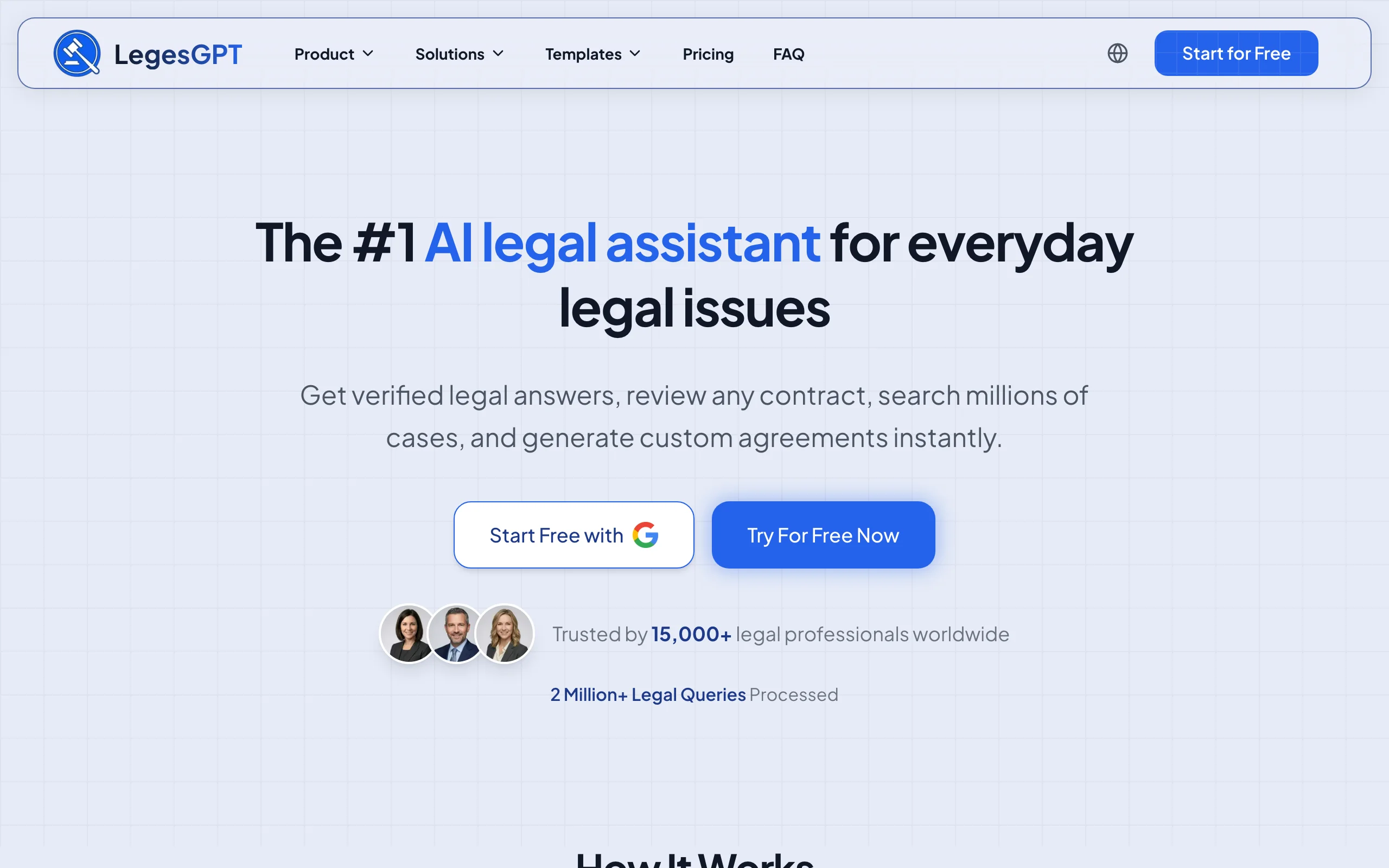
LegesGPT takes a risk-first approach: upload a contract (PDF, DOCX, PPTX, TXT, even an image) and it identifies the risks, flags the problematic clauses, and proposes specific changes in plain language you can paste straight into your counterparty email. Instead of a wall of annotations, you get an explanation of why a clause is dangerous and what to ask for instead.
It is also more than a single-purpose scanner. The same subscription answers legal questions with verified citations, searches case law and statutes, drafts contracts, and lets you e-sign the final version, so a lean in-house team or small firm can run the whole pre-signature workflow in one place. If you want to see how the flagging works in practice, the AI contract review software page walks through the workflow step by step.
Key features:
- Risk identification with plain-language explanations of why each flagged clause is a problem
- Proposed changes for every problematic clause, ready to use in negotiation
- Handles indemnity, liability caps, auto-renewal, termination, arbitration, and confidentiality clauses in commercial agreements and NDAs
- Legal questions answered with verified citations, plus case law and statute search for checking how a clause plays out in your jurisdiction
- AI contract drafting and e-signature, so you can fix a bad contract and sign the corrected one without switching tools
- Deep Research mode and web search on the top plan for multi-step questions about unusual terms
Best for:
- In-house teams of one to five people who need every inbound contract screened without enterprise procurement
- Solo practitioners and small firms flagging risks for clients before signature
- Founders and operations leads who sign vendor and customer agreements without in-house counsel
Pricing:
- Basic: $19.99/month for unlimited AI legal questions with citations and case law search
- Plus: $49.99/month adds contract upload and 50 document reviews per month; Premium: $99.99/month for unlimited reviews, Deep Research, and web search
- 3-day trial for $1; roughly 30% off with annual billing
Pros:
- Risk flags come with proposed fixes, not just highlights, which shortens the negotiation loop
- A fraction of the cost of enterprise risk platforms, with no seat minimums or sales cycle
- Research, risk flagging, drafting, and e-signature in one subscription
Cons:
- Web only: no Word add-in, public API, or mobile app, so Word-native teams switch windows
- No CLM-style repository or approval workflows for tracking thousands of contracts after signature
Review any contract in seconds
Upload a contract and LegesGPT flags risky clauses, surfaces obligations and deadlines, and answers questions with citations you can verify.
Try AI document review2. ThoughtRiver, best for high-volume pre-signature risk triage
ThoughtRiver is built for legal teams drowning in inbound paper. Its Lexible AI reads each contract at clause level and answers thousands of pre-trained legal questions about it, producing a risk assessment that shows which agreements are safe to sign and which need a lawyer. The pitch is triage: routine contracts flow through fast, and human attention goes to the genuinely risky ones. ThoughtRiver reports that complex agreements are assessed in under three minutes, work that takes hours manually.
Key features:
- Clause-level risk assessment against pre-trained legal questions
- Automated triage that routes low-risk contracts around the legal queue
- Remediation guidance suggesting how to fix flagged issues
- Issue lists and risk summaries for consistent, repeatable screening
Best for:
- In-house teams screening 20 or more inbound contracts a month, mostly on the counterparty's paper
- Legal ops leaders who want measurable turnaround-time reductions
Pricing:
- Professional: from £15,000/year, sized for teams reviewing 20 to 50 contracts monthly
- Enterprise: from £30,000/year for teams above 50 contracts a month
- Free 28-day trial
Pros:
- Purpose-built for risk triage rather than general document Q&A
- Published entry pricing, rare in this category
Cons:
- The £15,000 entry point only pays off at real volume; light users overpay per contract
- Focused on screening: drafting and research need other tools
3. Luminance, best for enterprise-scale first-pass markup
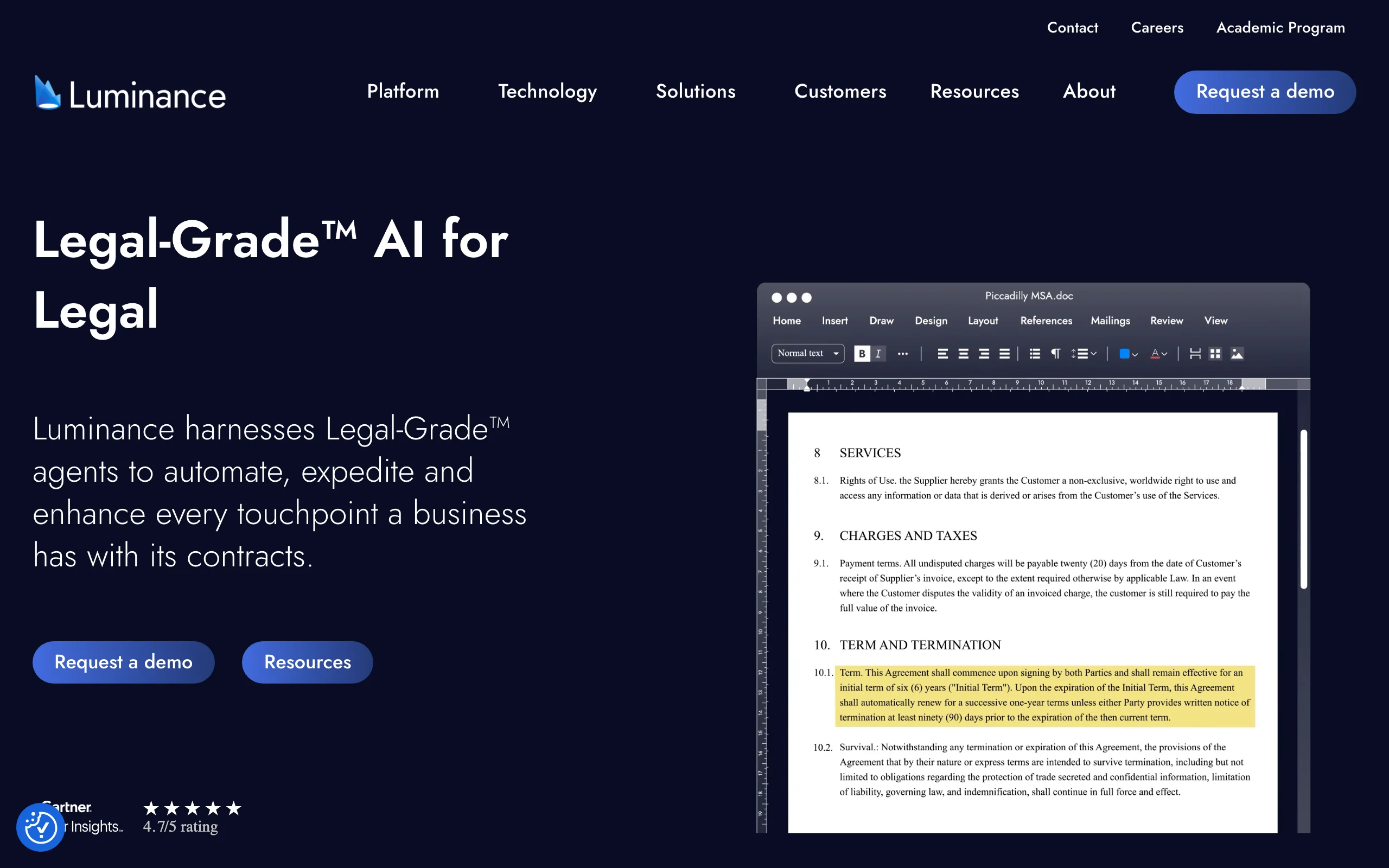
Luminance is an enterprise legal AI platform used by more than 1,000 organizations, including Big Four firms and multinational corporates. For risk work, it takes the first pass on any contract under negotiation, highlights areas of risk, flags non-standard clauses against your positions, and suggests compliant alternative wording. It integrates with Microsoft Word, and its "Panel of Judges" architecture cross-validates AI outputs before they reach your redline, an accuracy safeguard aimed at high-stakes transactional work.
Key features:
- First-pass markup highlighting risk areas across negotiated contracts
- Non-standard clause detection with suggested compliant alternatives
- Word integration for negotiating inside existing workflows
- Cross-validated AI outputs via a mixture-of-experts architecture
- Portfolio-level insight across a large contract estate
Best for:
- Large legal departments and firms standardizing first-pass markup across many lawyers
- Teams doing high-volume, high-stakes transactional work such as M&A due diligence
Pricing:
- Custom only; no published pricing, sales consultation required
- Third-party benchmarks put mid-size deployments at five to six figures annually, with implementation often adding 20 to 50% of the first-year license
Pros:
- Enterprise-grade accuracy safeguards and deployment options, including on-premises
- Strong at scale: consistent markup across teams and jurisdictions
Cons:
- Pricing and procurement are firmly enterprise; small teams are priced out
- Meaningful implementation cost and setup before value shows up
4. LexCheck, best for enforcing negotiation playbooks
LexCheck turns your negotiation playbook into an automated first pass. Upload your preferred positions and fallbacks, and it reviews each contract in Microsoft Word, flags language that deviates from your playbook, explains why the language needs attention, and generates the redlines to fix it, typically in minutes. Customers such as NetApp and RSM report dramatically faster deal cycles. It is the most focused tool on this list: it does playbook-driven markup, and that is the point.
Key features:
- Custom playbooks capturing your preferred and fallback positions
- Instant flags on deviating language with transparent reasoning
- Automated redline generation inside native Word workflows
- Playbooks deploy in minutes rather than months
Best for:
- In-house negotiation teams that already run written playbooks for NDAs, MSAs, or procurement paper
- High-volume sales or procurement contracting where consistency beats bespoke judgment
Pricing:
- Custom only; LexCheck does not publish prices
- Reported model is a flat yearly fee per contract playbook with unlimited users and volume (per the LawNext directory); free trial access is offered
Pros:
- Playbook-per-year pricing scales well for teams with many users on few contract types
- Redlines, not just flags, so reviewers start from a marked-up draft
Cons:
- Value depends on having (or building) a playbook; ad-hoc one-off contracts fit less well
- Word-centric: no browser-first workflow for teams outside Word
5. Legartis, best for multilingual European contract work
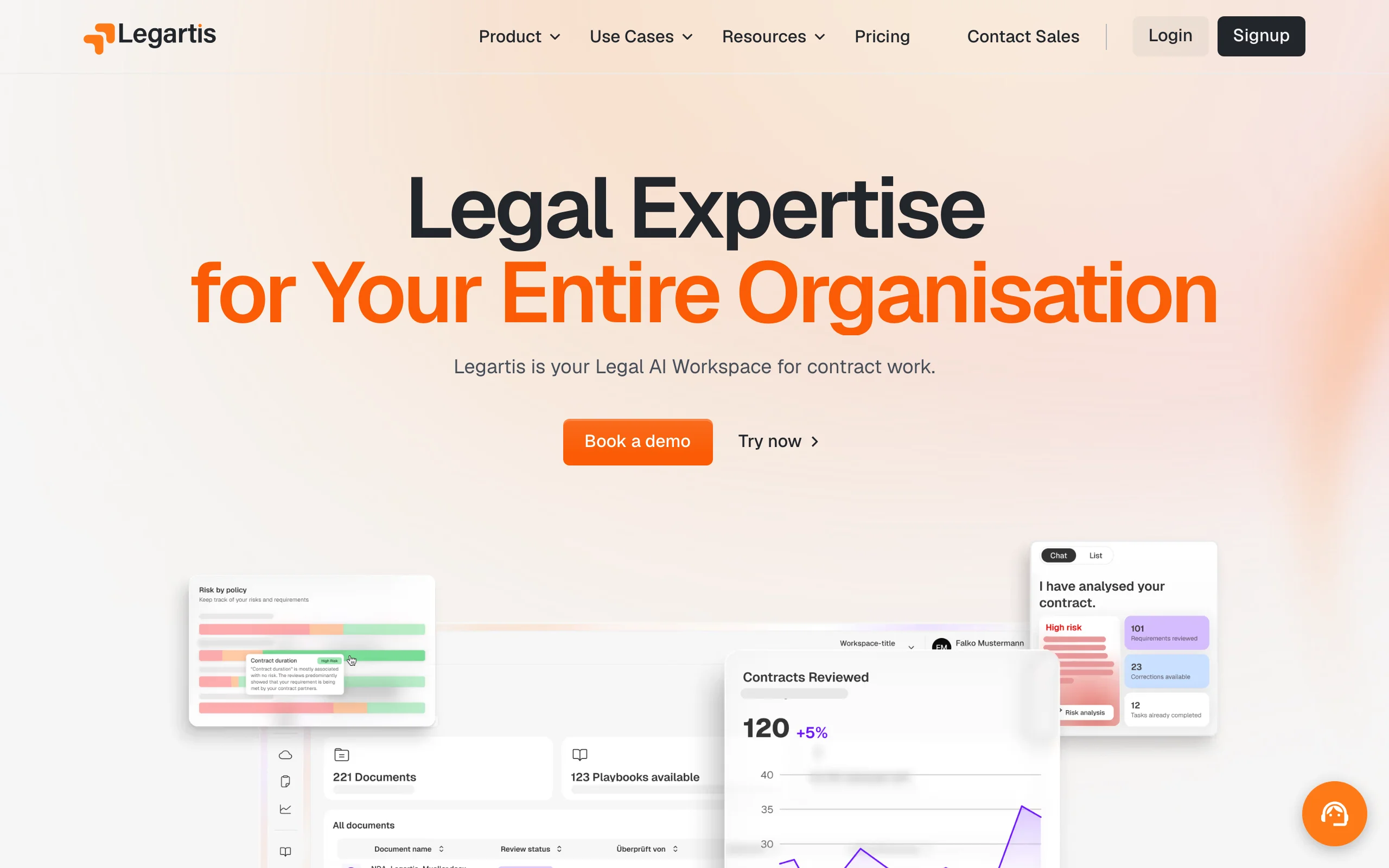
Legartis is a Swiss legal AI workspace whose review agent detects risks and deviations automatically, and it stands out on two axes: language and data residency. It works in all European languages and keeps all servers in Switzerland and Europe with ISO 27001 certification, which matters to EU legal teams with strict data rules. Beyond flagging, its Contract Insights dashboards track risks, deadlines, and critical clauses across your whole portfolio, and a playbook creator builds review standards from your feedback.
Key features:
- Automatic risk and deviation detection against playbooks
- Coverage of all European languages for cross-border contracts
- Portfolio dashboards for risks, deadlines, and critical clauses
- Word app, web app, and REST API deployment options
- EU/Swiss hosting with ISO 27001 certification
Best for:
- European in-house teams reviewing contracts in German, French, or other EU languages
- Legal, sales, and procurement teams that need non-lawyers to self-serve first-pass checks
Pricing:
- Free plan: 2 contracts per month, 1 seat, NDA best-practice playbook
- Professional: CHF 250/user/month (CHF 2,500/year) for 120 contracts a year and 3 custom playbooks; Team: CHF 3,000/user/year, 250 contracts, 5+ seats
- Enterprise: custom, for 500+ contracts a year
Pros:
- Genuine free tier to test on real contracts before paying
- Strongest multilingual coverage in this roundup
Cons:
- Per-user annual pricing adds up quickly for larger teams
- Contract volume caps on paid tiers require plan upgrades as usage grows
6. Ironclad, best for risk visibility across the contract lifecycle
Ironclad is a contract lifecycle management (CLM) platform, not a point tool, and that is its risk advantage: its AI flags risky clauses during negotiation, but it also tracks obligations, renewals, and non-standard terms across every contract in the repository after signature. Ironclad AI handles clause extraction, risk flagging, and AI-assisted markup, while the workflow designer routes risky contracts to the right approver automatically. Pick it when the problem is not one risky contract but an unmanaged portfolio of thousands.
Key features:
- AI clause extraction and risk flagging across the full repository
- Workflow designer that routes high-risk contracts to the right approvers
- Post-signature tracking of obligations, renewals, and non-standard terms
- AI-assisted markup during negotiation
Best for:
- Legal ops teams building a system of record for company-wide contracting
- Companies whose biggest risk exposure is in already-signed contracts nobody is tracking
Pricing:
- Custom only; no published pricing
- Vendr marketplace data reports first-year quotes commonly between $40,000 and $80,000 for 500 to 2,000 contracts a year, with AI capabilities often priced as a separate line item
Pros:
- Risk visibility does not stop at signature; the whole portfolio is searchable
- Strong workflow automation reduces risky contracts slipping through untracked
Cons:
- A CLM implementation project, not a tool you adopt in an afternoon
- Total cost (platform plus AI add-ons) is far beyond point solutions
All of LegesGPT for $1
Verified-citation answers, case law search, document review, AI drafting, and e-signature in one subscription. 3-day trial for $1, cancel anytime.
Start the $1 trial7. Spellbook, best for drafting and redlining inside Microsoft Word
Spellbook is a Microsoft Word add-in aimed at lawyers who draft and negotiate directly in documents. On the risk side, it reviews agreements in Word, suggests redlines, and benchmarks clauses against thousands of contract types so you can see when a term is off-market. Because it sits where transactional lawyers already work, adoption is easy for firms. It is drafting-first with risk features built in, rather than a dedicated scoring engine, which is exactly right for some teams.
Key features:
- AI redlining and clause suggestions inside Microsoft Word
- Clause benchmarking against a large corpus of contract types
- Multi-document review and custom playbooks
- SOC 2 Type II security posture
Best for:
- Transactional lawyers at small and mid-size firms who live in Word all day
- Teams that want drafting help and risk flags from a single add-in
Pricing:
- Custom only; every quote is per-seat via sales, no published prices
- Third-party benchmarks report entry plans around $99/user/month and team plans around $149/user/month on annual terms, with enterprise tiers higher and carrying seat minimums
Pros:
- Zero workflow change for Word-native lawyers
- Benchmarking gives market context, not just internal-playbook context
Cons:
- Requires Microsoft Word; no meaningful browser-only workflow
- Reported per-seat costs have risen sharply, and quotes are opaque until you talk to sales
How to choose the best AI contract risk analysis software for your team
Four questions separate the right pick from an expensive mistake.
1) How many contracts do you screen each month?
- If you handle a handful of agreements a month: LegesGPT's Plus plan at $49.99/month covers 50 reviews, and Legartis's free tier lets you test two.
- If you screen 20 to 50+ inbound contracts monthly: ThoughtRiver's triage model or LexCheck's playbook automation start to justify five-figure annual spend.
- If the volume is company-wide and post-signature too: that is CLM territory, which means Ironclad.
2) Do you need risk flags, or a full lifecycle system?
- If the pain is "tell me what is dangerous before I sign": a focused tool (LegesGPT, ThoughtRiver, LexCheck) delivers value in week one.
- If the pain is "we do not know what is in our signed contracts": Ironclad's repository and obligation tracking address the real problem, at implementation-project cost.
- Do not buy a CLM to solve a screening problem; you will pay for workflow software you never configure.
3) Where does your team work: browser or Word?
- If your reviewers negotiate in Word all day: Spellbook, LexCheck, or Luminance keep the risk flags inside the document.
- If you want zero installs and IT sign-off: LegesGPT runs entirely in the browser, and Legartis offers both web and Word apps.
- Cross-border European teams should shortlist Legartis for language coverage and EU data residency.
4) What does the price actually buy?
- Run the math per contract: £15,000/year at 30 contracts a month is roughly £42 per contract, while LegesGPT's Premium plan at $99.99/month with unlimited reviews can drop below $1 per contract at the same volume.
- Ask whether flags come with proposed fixes; a tool that drafts the counter-position saves more time than one that only highlights.
- Test before committing: run 3 to 5 of your real contracts through a trial and compare the flags against your own contract review checklist. Most AI tools for lawyers look similar in demos and very different on your actual paper.
Frequently Asked Questions
What is AI contract risk analysis software?
AI contract risk analysis software reads a contract and automatically identifies terms that could hurt you: uncapped liability, one-sided indemnity, missing termination rights, auto-renewals, or deviations from your standard positions. The best tools go beyond flagging and propose specific replacement language, so the output is a negotiation plan rather than a highlighted PDF.
How does AI identify risks in a contract?
Modern tools use large language models, often combined with clause libraries or playbooks, to compare each clause against known risk patterns or your stated positions. Some, like ThoughtRiver, answer thousands of pre-trained legal questions about the document; others, like LexCheck and Luminance, check deviations from a playbook. LegesGPT explains each risk in plain language and proposes the change to request.
What is the cheapest AI contract risk analysis software?
Legartis offers a free tier limited to 2 contracts a month. For real usage, LegesGPT is the lowest-cost serious option: contract upload and 50 reviews a month cost $49.99/month on the Plus plan, with a 3-day trial for $1. Enterprise platforms like ThoughtRiver start around £15,000 a year, and Ironclad or Luminance typically run five to six figures.
Is AI contract risk analysis accurate enough to rely on?
For first-pass screening, yes: vendors and case studies consistently show AI catching clause-level issues in minutes that take humans hours. But treat it as a strong first reviewer, not a final authority. A lawyer should still make the judgment call on flagged clauses, especially for high-value or unusual agreements, and anything involving potential breach of contract exposure deserves human sign-off.
Is it safe to upload confidential contracts to an AI tool?
Check three things: where data is hosted (Legartis keeps everything in Switzerland and the EU), security certifications (SOC 2 Type II or ISO 27001), and whether your data trains the vendor's models. Also confirm the tool's handling of NDAs and privileged material against your own confidentiality obligations before rolling it out to the team.
What is the difference between risk-flagging tools and CLM software?
Risk-flagging tools (LegesGPT, ThoughtRiver, LexCheck) analyze individual contracts before signature and tell you what to fix. CLM platforms like Ironclad manage the entire lifecycle: intake, approval workflows, e-signature, a searchable repository, and post-signature obligation tracking. CLMs cost 10 to 100 times more and take months to implement, so buy one only if lifecycle management, not screening, is the actual problem.
Can these tools handle due diligence on many contracts at once?
Enterprise platforms are built for it: Luminance made its name on M&A due diligence across large document sets, and Ironclad can surface risky terms across a whole repository. Point tools work contract by contract, which suits day-to-day screening but not a 2,000-document data room.
If I mainly need quick risk checks before signing, what should I use?
If you want to upload a contract and get the risks identified, the problematic clauses flagged, and specific changes proposed in plain language, LegesGPT is the strongest fit. It starts at $19.99/month (contract upload from $49.99/month), needs no implementation, and the $1 trial lets you test it on a real contract today.