
A demand letter is often the cheapest way to get paid, recover a deposit, or settle a claim without filing suit. It is also easy to get wrong: a vague amount, a missing deadline, or a threat the law does not support can weaken your position before the dispute even starts.
AI demand letter software (often called an AI demand letter generator) now drafts that letter from your facts in minutes, whether the claim is an injury settlement, an unpaid invoice, a breach of contract, a withheld security deposit, or unpaid wages. The better tools also check the legal basis for the demand and help you send it.
This guide compares the 7 best AI demand letter software tools for lawyers, law firms, and small businesses. For each one you get what it drafts, pricing, honest pros and cons, and a framework for picking the right fit for your type of claim.
Best AI demand letter software: a brief overview
All-purpose demand letter drafting
- LegesGPT: Best overall for any type of demand letter: drafts from your facts, grounds the claim in cited statutes and case law, reviews the other side's contract, and sends documents for e-signature, from $19.99/mo.
Built for law firms
- CaseMark: Best pay-as-you-go option for firms that draft demands across practice areas, with separate workflows for demand letters, legal letters, and cease-and-desist letters.
- EvenUp: Best for high-volume personal injury firms that want demand packages reviewed by an in-house team.
- Filevine DemandsAI: Best for injury firms already running cases in Filevine.
Built for businesses and individuals
- Rocket Lawyer: Best for small businesses that want guided payment demand templates plus access to an attorney.
General AI assistants
- ChatGPT: Best free starting point for a simple, low-stakes demand letter you will check yourself.
- Claude: Best for rewriting a demand into a firm but professional tone.
AI demand letter software compared
| Tool | Best for | Starting price | Free trial | Demand types |
|---|---|---|---|---|
| LegesGPT | Any demand letter, research-backed | $19.99/mo | 3-day, $1 | Any: injury, debt, contract, deposit, wages, cease and desist |
| CaseMark | Pay-as-you-go firm workflows | $100/user/mo (incl. $100 usage) | Free, $5 usage credit | Injury, commercial, cease and desist, statutory notices |
| EvenUp | High-volume PI demand packages | Custom (case-based) | Demo only | Personal injury |
| Filevine DemandsAI | PI firms on Filevine | Custom | Demo only | Personal injury |
| Rocket Lawyer | Small-business payment demands | $34.99/mo | 7-day free | Money owed, collections, cease and desist |
| ChatGPT | Free, simple letters | Free; Plus $20/mo | Free tier | Any (unverified) |
| Claude | Tone and rewriting | Free; Pro $20/mo | Free tier | Any (unverified) |
1. LegesGPT, best overall AI demand letter software for any type of claim
LegesGPT treats a demand letter as what it is: a legal document that should rest on an actual right to payment. Describe what happened in plain English (the unpaid invoice, the broken lease term, the withheld deposit, the missed wages, the accident) and it drafts a complete letter with the facts, the amount, the legal basis, a response deadline, and the consequence of ignoring it.
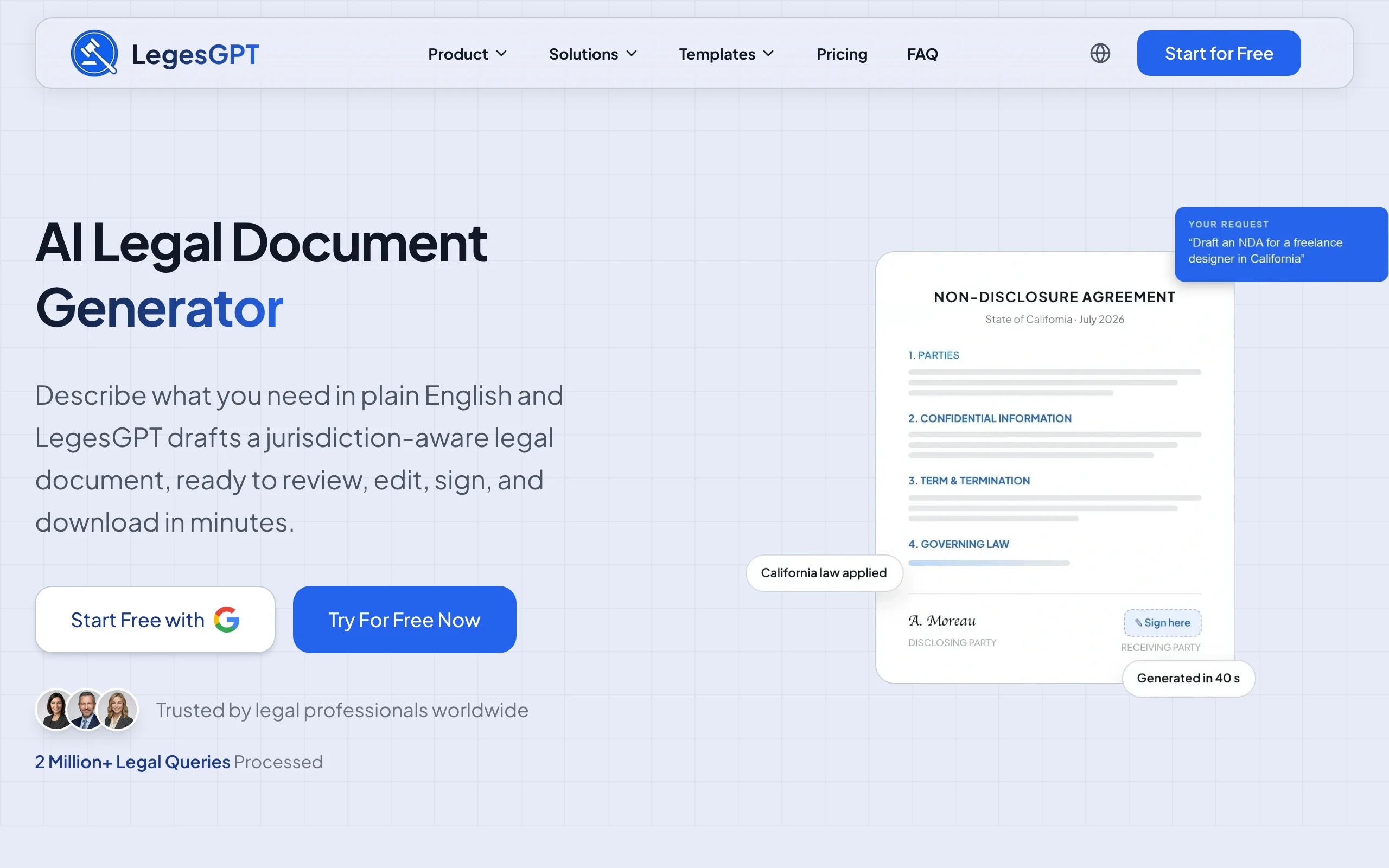
The difference from a generic chatbot is the research behind the letter. Ask which statute sets the deadline for returning a security deposit in your state, or whether a prompt-payment law allows interest on a late invoice, and you get an answer with verified citations and source links you can drop into the letter. You can also run a case law search with AI when you want a decision that supports your position. If the dispute turns on a contract, upload it and the AI document review tool flags the payment, termination, and notice clauses that matter and proposes changes. Once the letter is final, e-signature lets you sign and send it without a separate app.
Key features:
- Drafts demand letters of any type from a prompt or your facts, or from 100+ templates
- Legal research with verified citations to back the claim (statutes, deadlines, penalties)
- Document review that flags risky or relevant clauses in the underlying contract and proposes fixes
- Built-in e-signature to sign and send the final letter
- Deep Research mode for multi-step questions, such as whether a claim is still within the limitation period
Best for:
- Solo attorneys and small firms that write demands across several practice areas, not just injury
- Small-business owners and landlords who want a letter that cites the right law, not just a firm tone
- In-house teams chasing vendor breaches and unpaid amounts
Pricing:
- Basic: $19.99/mo (unlimited questions, case law and statute search, verified citations)
- Plus: $49.99/mo (adds document generation, document upload, and 50 document reviews/month)
- Premium: $99.99/mo (unlimited document reviews, Deep Research, web search)
- 3-day trial for $1; annual billing saves 30%
Pros:
- One tool covers every stage: research the claim, draft the letter, review the contract, sign and send
- Handles any demand type, so a firm or business does not need a separate tool per dispute
- Self-serve, flat monthly price with no per-letter or per-case fees
Cons:
- No medical chronology or records-sorting engine, so high-volume injury firms may still pair it with a PI-specific service
- Web-only, with no case management integration, Word add-in, mobile app, or API
Draft a demand letter from your facts in minutes
From NDAs to leases to letters — describe what you need and LegesGPT drafts a tailored, ready-to-edit legal document in minutes.
Generate a document2. CaseMark, best pay-as-you-go AI demand letter tool for law firms
CaseMark is an AI workspace for litigators built around ready-made workflows (the company lists 880+ agent skills). Several of them target demand letters directly. The demand letter workflow takes a case facts summary and client information, plus optional contracts, correspondence, damages documentation, or medical records, and returns a formatted letter with a statement of facts, legal basis, itemized damages, deadline, and consequences. A separate legal letter workflow covers settlement demands, cease-and-desist letters, statutory notices, and insurance claim letters, and there is a dedicated trademark cease-and-desist workflow.
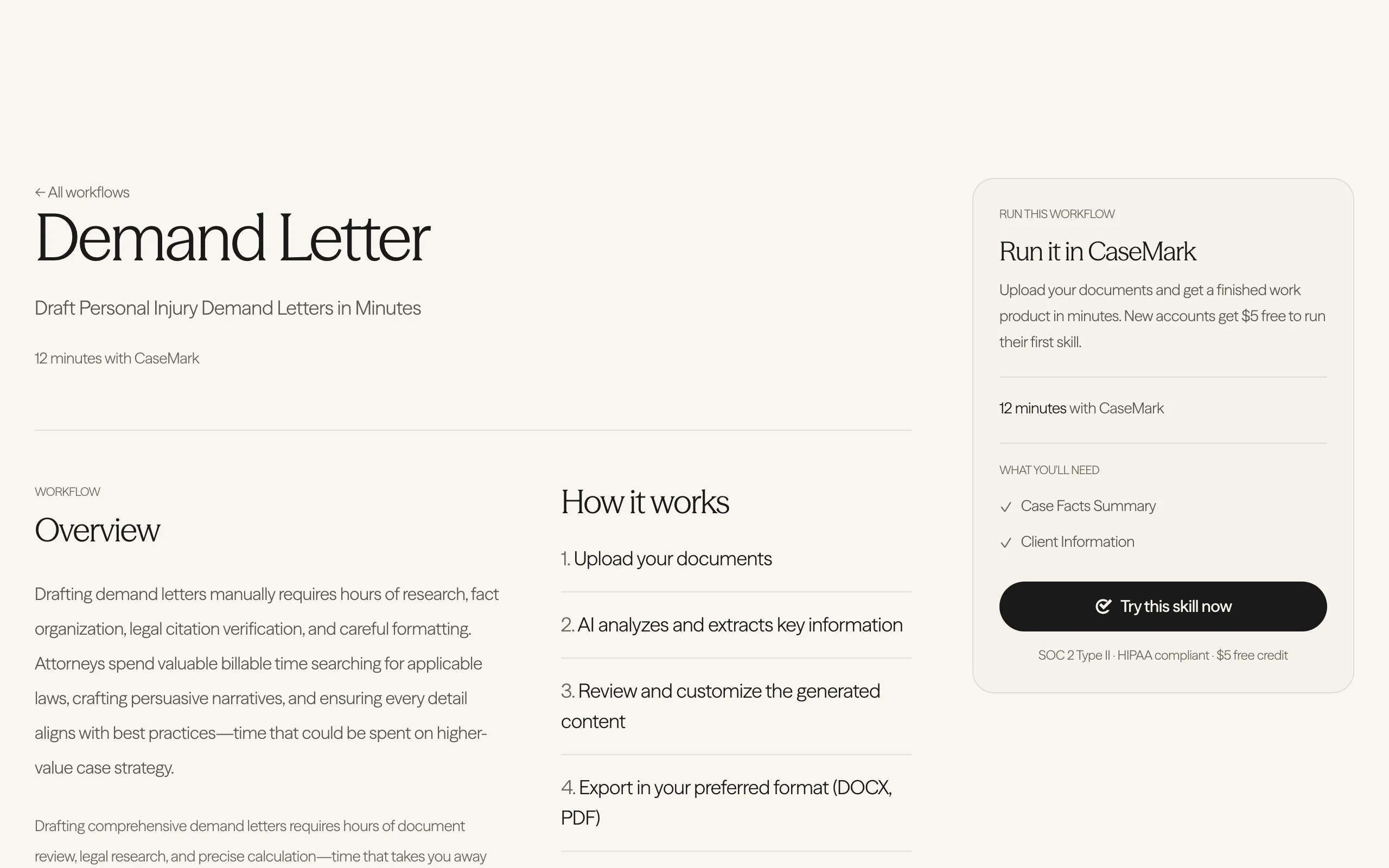
CaseMark says its demand letter workflow turns roughly three hours of drafting into about 12 minutes, and its legal letter workflow includes quality checks on names, dates, case numbers, and attachments. It is software your team runs, not a service that writes the letter for you.
Key features:
- Dedicated workflows for demand letters, settlement demands, legal letters, and trademark cease-and-desist letters
- Extracts facts, dates, and damages from uploaded case documents
- Demand package compilation for injury, commercial, contract, employment, and property claims
- Enterprise plan offers a BAA for firms handling health information
Best for:
- Litigation firms that send demands in commercial, contract, and injury matters
- Firms that prefer paying for usage over a per-case service fee
Pricing:
- Pro: $100/user/mo including $100 of monthly usage
- Teams (2-10 users): custom; Enterprise: BAA available starting at $200/user/mo
- Free trial for one user with $5 of one-time usage, no credit card
Pros:
- Covers more demand types than the PI-only platforms
- Published pricing and a no-card trial
Cons:
- Built for law firms; the workflow format assumes you already know the legal basis of the claim
- Usage-based billing makes monthly cost harder to predict at high volume
3. EvenUp, best for high-volume personal injury demand packages
EvenUp is the best-known name in injury demands, used by more than 2,000 personal injury firms according to its site. It offers two routes: Express Demands drafted by AI in minutes, and Expert Demands drafted by AI plus EvenUp's team of legal professionals, delivered in 1 to 5 days. Demands include liability narratives, treatment timelines, ICD codes, damages accounting, and comparable verdict context; EvenUp cites a 250K+ verdict and settlement dataset.
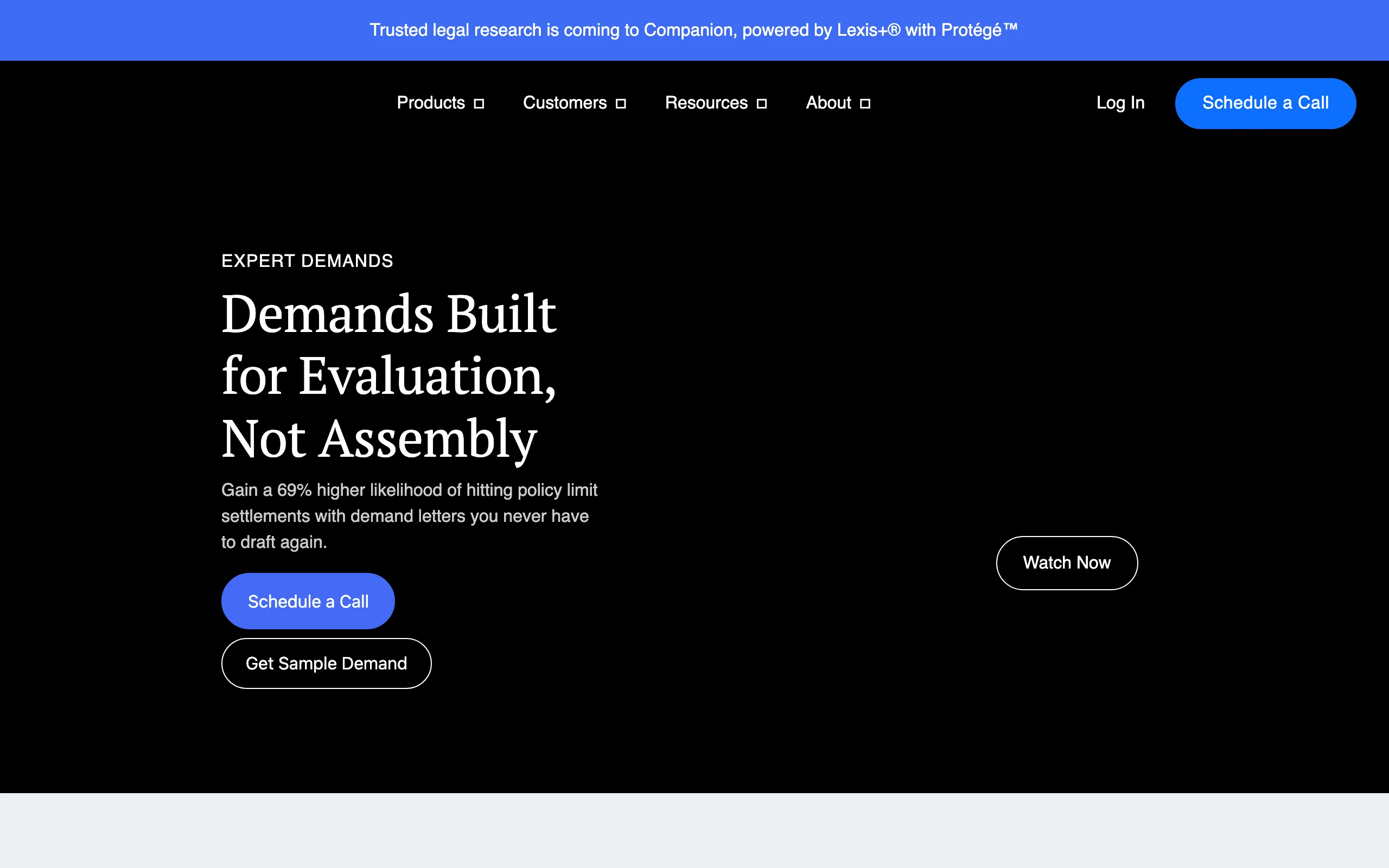
It is purpose-built for one kind of demand. If your firm also sends contract, collection, or employment demands, you will need another tool for those. For a deeper look at PI-specific platforms, see our guide to the best AI tools for personal injury lawyers.
Key features:
- AI-only Express Demands or human-reviewed demands in 1 to 5 days
- Medical facts organized into treatment timelines, with ICD codes
- Verdict and settlement data to support the demand amount
- Case management integrations that pull in case details and files
Best for:
- Plaintiff firms with steady PI volume that want to outsource demand drafting
- Firms that value a human quality check on every package
Pricing:
- Not published; EvenUp describes "all-in-one, case-based pricing"
- Evaluated through a sales call or demo
Pros:
- Deep injury-specific data and a reviewed-by-people option
- Frees paralegal time on medical summaries
Cons:
- Personal injury only
- No public pricing or self-serve trial
4. Filevine DemandsAI, best for injury firms already on Filevine
Filevine DemandsAI drafts personal injury demand letters from the case data already stored in Filevine's case management platform. Firms can tailor templates to their own style, and Filevine cites a customer example of 24-hour turnaround on demand letters. Because the data lives in the same system, there is less copying of medical specials and case facts between tools.
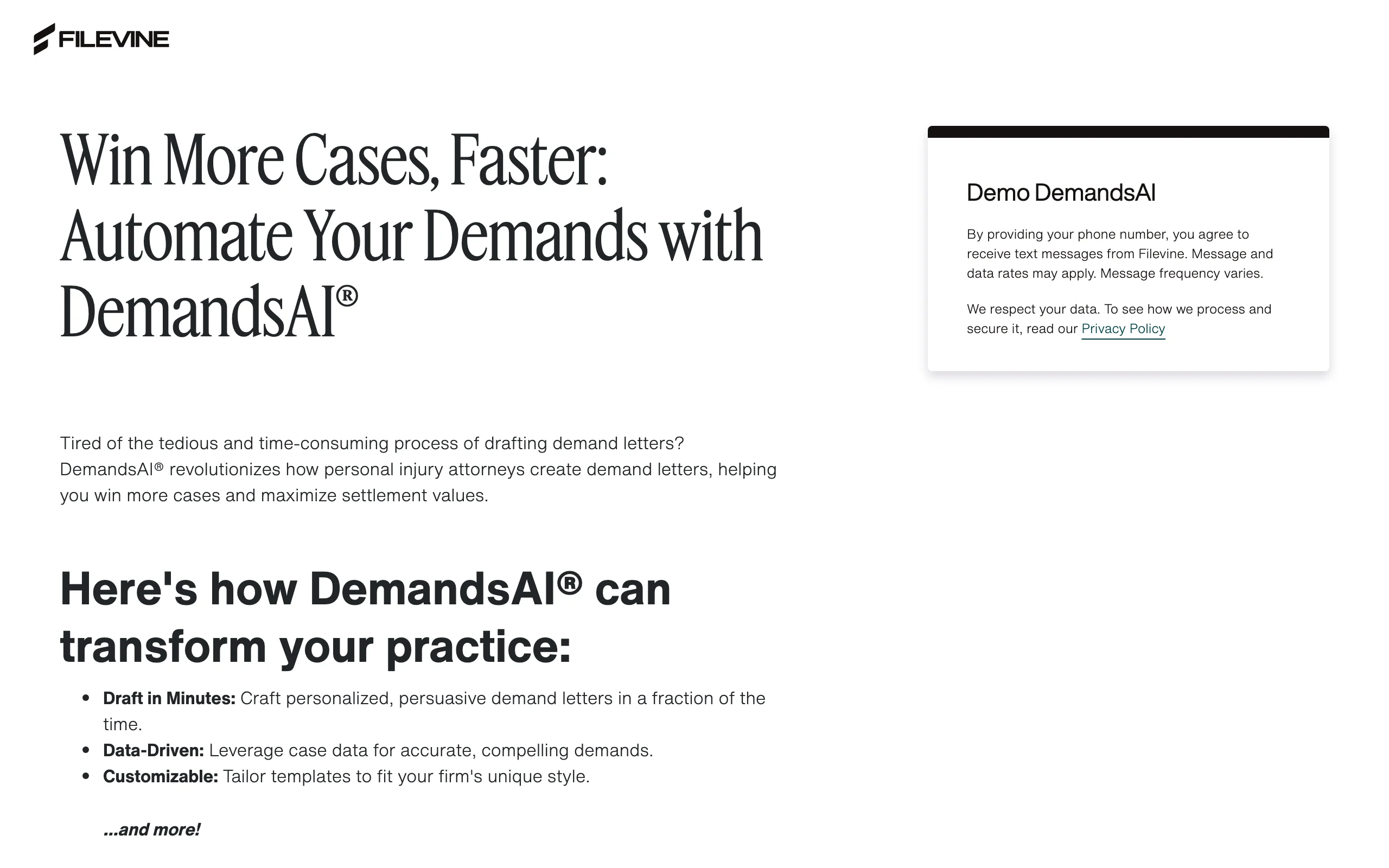
DemandsAI sits alongside Filevine's other AI features, including its LOIS assistant. Filevine also offers LOIS Explore, a free tier for trying AI research and drafting, though it does not include case management.
Key features:
- Demand letters drafted from existing Filevine case data
- Customizable templates to match your firm's format
- Sits inside the case management system your team already uses
- Free LOIS Explore tier for testing Filevine's AI
Best for:
- PI firms whose cases already run on Filevine
- Firms that want demand drafting inside their case management system
Pricing:
- Custom; "all packages are custom built" per Filevine
- Demo required for DemandsAI
Pros:
- No re-entry of case facts between systems
- Firm-specific templates keep letters consistent
Cons:
- Focused on personal injury demands
- Most valuable only if your firm adopts Filevine as its case management system
5. Rocket Lawyer, best for small businesses chasing unpaid money
Rocket Lawyer approaches demand letters from the business owner's side. Its document library includes a Demand for Money Owed, a Collection Letter, and 30-day and 90-day past-due letters, each built by answering guided questions. Its AI assistant, Rocket Copilot (an enhanced version launched in beta in May 2026), answers legal questions, reviews contracts, and can help draft documents such as a cease-and-desist letter.
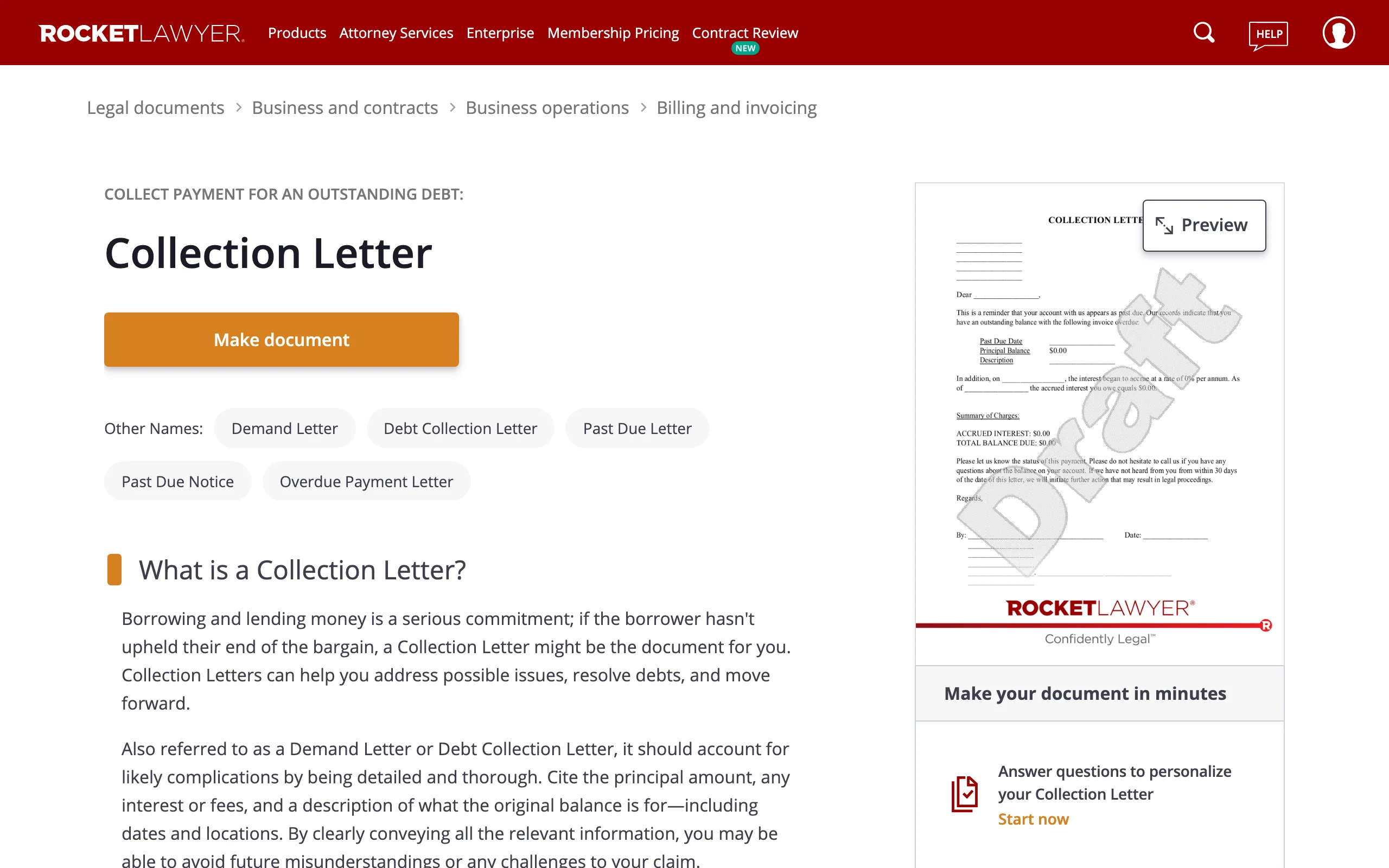
The main draw for small businesses is attorney access on the same membership. Every plan includes Ask an Attorney questions, and higher tiers add live attorney consultations, which is useful when a demand might turn into a lawsuit.
Key features:
- Guided templates for money owed, collections, and past-due notices
- Rocket Copilot AI for legal Q&A, contract review, and drafting help
- Unlimited documents and e-signatures on all plans
- Ask an Attorney on every plan; live consultations on Plus and Pro
Best for:
- Small businesses collecting on unpaid invoices
- Owners who want a lawyer to glance at the letter before it goes out
Pricing:
- Standard $34.99/mo, Plus $49.99/mo, Pro $64.99/mo (monthly billing)
- Annual plans from $149/year; 7-day free trial
Pros:
- Business-friendly guided questions, no legal drafting skills needed
- Attorney access bundled into the subscription
Cons:
- Template-driven letters are less tailored to unusual facts
- Copilot's enhanced version launched in beta in May 2026, and the tool is not built for law firm workflows
6. ChatGPT, best free starting point for simple demand letters
ChatGPT can produce a clean, well-structured demand letter from a short description, and the free plan is enough for a one-off letter to a customer who owes you $600. It is good at structure and tone: facts, amount, deadline, and next steps in a few paragraphs.
The risk is the legal content. A general chatbot does not verify citations, so it can name a statute that does not exist, quote the wrong penalty, or promise a remedy your state does not allow. Treat anything it says about the law as unconfirmed until you check it against a primary source.
Key features:
- Drafts and rewrites letters from a plain-language prompt
- Adjusts tone, length, and format on request
- File uploads for pulling facts from invoices or emails
Best for:
- Individuals and small businesses with a simple, low-value demand
- A quick first draft you will verify yourself
Pricing:
- Free plan available
- Plus: $20/mo; Go and Pro tiers also available
Pros:
- Free and fast for simple letters
- Very good at structure and plain language
Cons:
- No citation verification, so legal references can be invented
- No built-in legal templates, document review workflow, or e-signature
7. Claude, best for tone and rewriting
Claude is a strong writing partner for the part of a demand letter that people underestimate: tone. Paste in an angry draft and ask for a firm, professional version that states the facts, the amount, and the deadline without insults or threats you could regret. It also handles long pasted email threads well, which helps when you need to reconstruct a timeline.
Like ChatGPT, it is a general assistant. It does not verify legal citations, so use it for wording and structure, and confirm the legal basis elsewhere.
Key features:
- Rewrites drafts into a firm, professional tone
- Summarizes long correspondence into a clean timeline
- Projects for keeping a matter's documents together
Best for:
- Polishing a draft you already have
- Businesses that send many customer-facing letters
Pricing:
- Free plan available
- Pro: $20/mo, or $17/mo billed annually
Pros:
- Excellent control of tone and clarity
- Handles long documents and correspondence
Cons:
- No legal research with verified citations
- No demand letter templates or signing workflow
How to choose the best AI demand letter software
1) What kind of demand are you sending?
- If it is a personal injury demand with medical records and specials: EvenUp or Filevine DemandsAI for high volume; LegesGPT if you draft your own demands and also want research and review. Our best Supio alternatives guide compares more injury-focused platforms.
- If it is a commercial, contract, or employment demand: LegesGPT or CaseMark, since both handle demand types beyond injury.
- If it is an unpaid invoice, deposit, or consumer dispute: LegesGPT for a letter backed by the right statute, or Rocket Lawyer for guided templates plus attorney access.
2) Do you need the law behind the letter, or just the wording?
A demand letter is stronger when it cites the rule that gives you the right to payment: a security deposit statute, a prompt-payment law, a wage-payment penalty, or the contract clause itself. Tools with an AI legal assistant that returns verified citations (LegesGPT) let you add that authority with confidence. ChatGPT and Claude write well but can invent citations, so they are best for tone and structure only. If you want to see how lawyers structure these letters, read our demand letter samples from attorneys.
3) Are you a law firm or a business owner?
- Law firms: weigh workflow fit. CaseMark suits firms that want usage-based workflows; EvenUp and Filevine suit PI shops with volume; LegesGPT suits firms that want one subscription for drafting, research, review, and signing.
- Business owners: you need plain language and a clear next step. LegesGPT works as an AI legal assistant for business owners that drafts, cites, and sends; Rocket Lawyer adds bundled attorney questions.
4) What will it cost per letter?
Flat subscriptions (LegesGPT, Rocket Lawyer, ChatGPT, Claude) cost the same whether you send one letter or fifty. Usage pricing (CaseMark) scales with volume. Case-based and custom pricing (EvenUp, Filevine) makes sense only at steady PI volume. Before committing, run two or three of your real disputes through a trial and compare the drafts side by side. If you want a starting structure before you try any tool, our demand letter template covers the standard sections.
All of LegesGPT for $1
Verified-citation answers, case law search, document review, AI drafting, and e-signature in one subscription. 3-day trial for $1, cancel anytime.
Start the $1 trialFrequently Asked Questions
What is AI demand letter software?
AI demand letter software drafts a formal demand for payment or action from the facts you provide, such as the amount owed, what went wrong, and the deadline for a response. Some tools only generate the wording, while others also research the legal basis for the claim, review the underlying contract, and let you sign and send the finished letter.
What is the best AI for demand letters?
For most lawyers and small businesses, LegesGPT is the best all-around choice because it drafts any type of demand letter, backs the claim with verified citations to statutes and case law, reviews the related contract, and handles e-signature, from $19.99 per month. High-volume personal injury firms may prefer EvenUp or Filevine DemandsAI, and law firms that want pay-as-you-go workflows can look at CaseMark.
Can AI write a demand letter for an unpaid invoice or breach of contract?
Yes. Describe the agreement, what was delivered, the amount due, and the payment history, and an AI demand letter generator can produce a complete letter with a response deadline. For a stronger letter, cite the contract clause that was breached and any state law that allows interest, fees, or penalties, and check those references before sending.
Is an AI-generated demand letter legally valid?
A demand letter is not a court filing, so there is no special format it must follow to be valid. What matters is that the facts are accurate, the amount is supported, any legal references are real, and you do not make threats the law does not allow. Review every AI draft before sending it, and have a lawyer check letters on high-value or complex claims.
Can I use ChatGPT to write a demand letter?
You can use ChatGPT for a simple, low-stakes letter, and it is good at structure and tone. The risk is that it does not verify citations, so it can reference statutes or penalties that do not exist or do not apply in your state. Confirm every legal reference against a primary source, or use a legal AI tool that returns verified citations.
Does DoNotPay still write demand letters?
DoNotPay's current homepage presents it as a consumer AI for fighting companies, finding missing money, and canceling subscriptions, and it no longer highlights demand letters. In 2025 the FTC finalized an order that bars the company from claiming its service performs like a human lawyer without evidence and requires it to pay 193,000 dollars, so compare current alternatives before relying on it.
How much does AI demand letter software cost?
Prices fall into three groups. Flat subscriptions include LegesGPT from $19.99 per month, Rocket Lawyer from $34.99 per month, and ChatGPT Plus or Claude Pro at $20 per month. CaseMark charges $100 per user per month including $100 of usage. EvenUp and Filevine DemandsAI use custom or case-based pricing quoted by sales.
If I send demand letters for many different kinds of disputes, what should I use?
Use a tool that is not limited to one practice area. LegesGPT drafts injury, debt, contract, security deposit, wage, and cease-and-desist demands from your facts, grounds them in cited law, and lets you sign and send them from one browser app, with a 3-day trial for $1.